If you eat your own dog food every day, you’ll make sure it’s damn good.
It's scary to declare big ambitions out loud. You want to build something that matters, but you also know that the first few months are just you and a handful of people who trust you with their work. The way I've learned to deal with that is to jump in anyways. Practice what you preach. Build a product and use it every day. Listen to the people you're building for and help them succeed.
It's okay to be unapologetically ambitious, but building something big starts with tiny steps. The first few believers, the first people who trust us with their content.
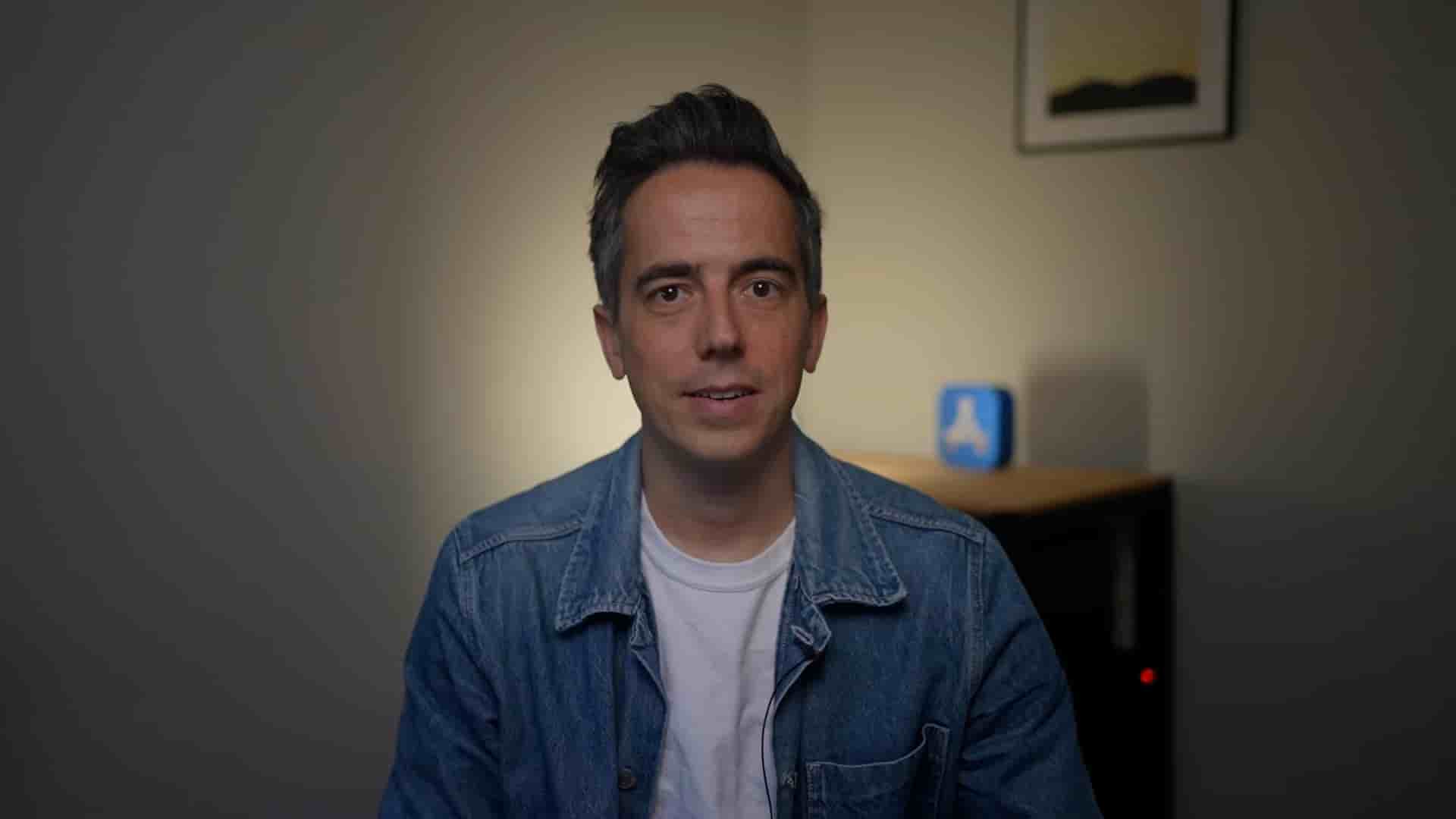
This video was recorded on Detail. It's published on Subwave. The platform I'm talking about is the platform you're watching me on. This is how we build Detail and it's how we're going to build Subwave.
When we started building Detail five years ago, the first version wasn't great. Recording my own videos with it was really hard. Most of my colleagues on the team felt the same way. They'd open Detail, hit a rough edge, gave up, and then go back to whatever editor they'd been using for the past decade. Muscle memory is really hard to fight.
Meanwhile, a lot of our competitors were announcing their products with flashy After Effects trailers. The best video editor you've ever seen. They used polished launch videos made with tools that were not the tool that they were selling.
The rule was that we had to make our own marketing content with our own product. If we couldn't, the product wasn't ready.
For months the answer was no. The workflow would break, someone would reach out for Final Cut or Premiere or CapCut. We took each one of these moments as input to improve. Where did the workflow break? Why did they reach for the other tool? We would fix it and try again.
At some point I drew a line and honestly I sort of forced the team a bit. We were going to use Detail for our own content. That was the rule, only Detail.
Every now and then we still fall back to other tools. There are things that Detail doesn't do or that just don't fit with what we want to do. But the overwhelming majority of what our content team ships every week is made with our own product. That's how Detail got good.
The content that we make also has to reflect the product that we're building. If Subwave is for conversational, in-depth and honest work, we can't go promote it with flashy hyper-edited clips or AI-generated avatars reading somebody else's script. That would sell the opposite of what this platform is for.
Take the time to explain. That's the type of stories we'd like to help you create.
We're building tools that help you tell your story in an authentic way. We want to take the time to explain. That's the type of stories we'd like to help you create and the content that we put out on this channel has to look like that too.
We're super early. The product is still a little bit rough around the edges, but we're shipping new features and improvements every day. The team and I are publishing on Subwave to learn, test, and improve.
The first channels are my own channel, the Random Chats from Diego or Frank's video focused channel, our Detail Podcast and Interviews channel, or the book reviews by Lauren. Everyone on the team has a channel. Some of these channels are public, some of them are private channels, or just experimental – but everyone is publishing things.
Sometimes those things work, sometimes they don't. And either way we learn what's missing from the product, by being the people who hit the missing part first.
Now that our product is shaping up and the foundation is there, we're teaming up with more people with interesting and inspiring stories to share. This could be journalists, authors, podcasters, teachers, entrepreneurs or activists. The folks who dive into a topic and break it apart for others.
This is going to be a small group from outside of the team. We will help them set up their channels, figure out the format they want to work in and build an audience together. We'll do this for free. Not out of generosity, but because sitting next to someone while they publish, and teaming up with them to help them grow, is the best way to learn how to make them successful.
That's what we did with our own content team for Detail over the past years. We publish 30 videos a week on our content channels and created a production line that reaches 2 million people a month, with no paid acquisition. And now we want to do the same with Subwave, while supporting inspiring people to help them share their story and grow on Subwave and other platforms.
If you're someone who wants to try this, please reach out, we'll learn together.
The reason for doing all of this in public instead of behind a wall is straightforward. Publishing what you're working on forces you to actually do it, and every post is a product test. If the upload breaks, I see it before a paying customer does. If the transcript is off, I see it. If a clip looks wrong, I fix it.
The more important reason is trust. You can't build a platform for independent creators from behind a curtain.
The only way to earn the audience is to be in the room with them while the room is being built.
I'll share product updates when we ship something worth talking about: what we built, what broke, what's next, and why. I'll also share longer pieces where I think out loud about how we build, including open protocols, the European foundation, and where the industry is heading.
If it works, you'll see why. If it doesn't, you'll see that too. Subscribe if you want to follow along.