Learn how to connect two iOS devices for automatic multi-angle recording without manual syncing or complicated editing workflows.
Recording with multiple camera angles usually means dealing with a messy workflow. You film on separate devices, import everything into an editing app, manually line up the footage, and spend way too much time syncing audio. It's tedious work that adds unnecessary steps between you and your finished video.
There's a better way. Detail lets you connect two iOS devices directly to the same project, automatically syncing your footage so you can switch between angles and edit everything in one timeline. No importing, no manual syncing, no external software needed.
The setup is simple. You need two iOS devices, which can be two iPhones, an iPhone and an iPad, or two iPads. The iPhone and iPad combo is a personal favorite because chances are you already have both at home. This isn't some complicated professional rig. It's equipment you probably already own.
The only other requirement is having the Detail app installed and updated on both devices. If one device is running an outdated version, you might run into connection issues, so make sure both are current.
Open the Detail app on both devices and start a new project on each one. Once both projects are running, tap the three dots at the top of each screen and select "connect" on both devices. Give it a few seconds, and you're done. Both devices are now synced automatically into one project.
By default, you'll see a split screen layout with both devices using the selfie camera. You can change this layout now or adjust it later during editing. There's no pressure to get it perfect before filming since everything is customizable afterward.
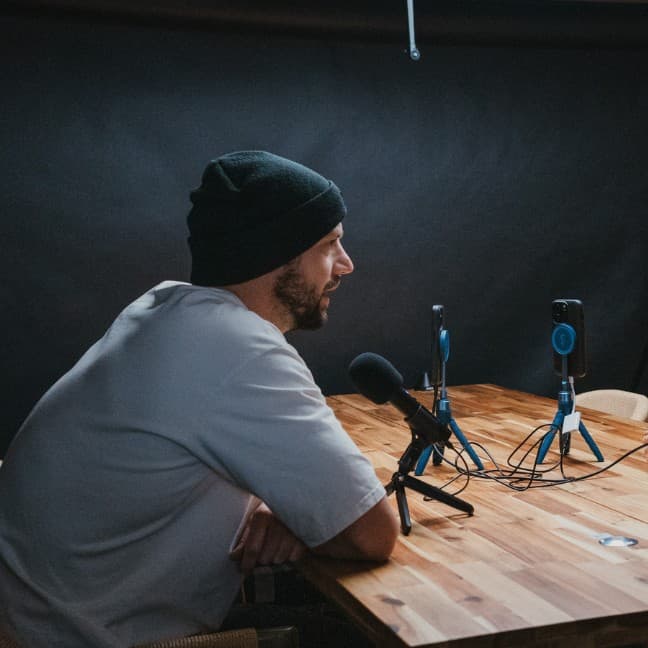
What you do need to decide before recording is which camera to use on each device. You can tap "flip camera" on either device to switch between front and back cameras. The back camera offers better quality, so here's a smart setup: keep your main phone as a monitor using the selfie camera, and use the back camera on the other device for higher quality footage.
Once both devices are connected, recording is ridiculously simple. Hit record on either device, and both angles start recording simultaneously. When you're finished, tap stop on either one.
Each device will save its own project timeline. So, whatever you edit on your iPad is not going to affect the project you have in your iPhone and vice versa.
After recording, tap "disconnect" on both devices. This step is important because it triggers both devices to upload their high-res videos. On each device, tap the arrow icon at the top and choose "high quality" to ensure you're working with the highest resolution video from both devices.
This is where things get fun. Since both videos are already saved and synced, you can jump straight into editing. No importing files, no matching timestamps, no complicated alignment process.
Remember that layout you chose before filming? You can change it during editing. Select your clip, go to the layout options, and choose between split screen, picture in picture, or single shot. If you select single shot, you can toggle between camera angles by tapping "source." This gives you access to both camera angles you recorded, letting you switch between them with a single tap.
This approach makes editing way faster. You just pick the shot you want and keep moving forward, all within one timeline. Your videos automatically get a more dynamic, professional look without the usual multi-camera headaches.
The beauty of this setup is its simplicity. You're not learning complex software or investing in expensive equipment. You're using devices you already own with an app designed to eliminate the tedious parts of multi-angle video production.
The automatic syncing alone saves enormous amounts of time. Anyone who's manually synced footage knows how much of your creative energy gets drained by technical busywork. With Detail, that step disappears entirely, letting you focus on what actually matters: telling your story and creating engaging content.
Whether you're filming tutorials, interviews, product reviews, or any other content that benefits from multiple perspectives, this workflow transforms what used to be a complicated process into something straightforward and accessible.