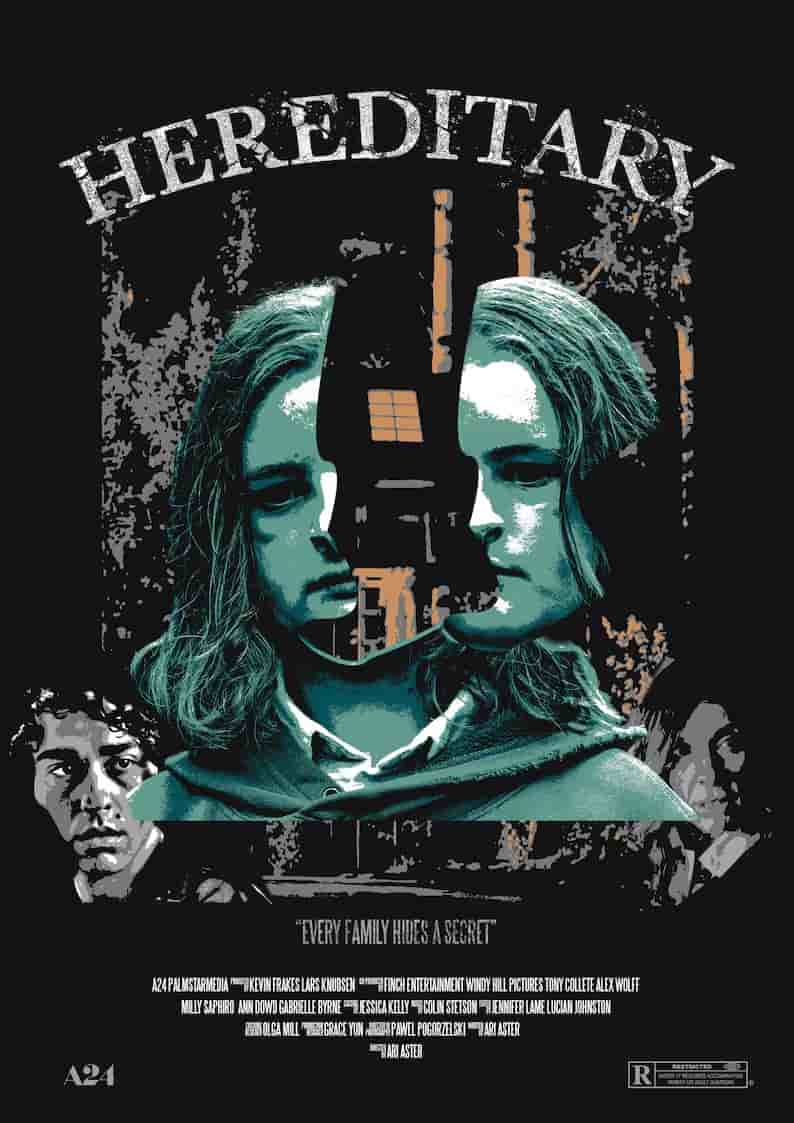
A daughter speaks at her mother's funeral, and admits she didn't fully know her. What follows is a family unraveling in grief, guilt, and the desperate need to reach the dead.
She liked keeping secrets. Her tastes were her own, her friends were different from yours, and her worries were ones she carried alone. Understanding her was never simple, and if you thought you had her figured out, that was your mistake, not hers. But when she was happy — when she was genuinely, fully happy — she was the warmest, most loving person in any room.
That is the portrait that opens this story: a daughter standing at a funeral, admitting she would rather not be there speaking at all. It is an uncomfortable kind of honesty, the sort that people usually edit out of eulogies. She was stubborn, this mother. She had an answer for every question, and on the rare occasions she was wrong, the fault somehow landed on whoever was disagreeing with her. Her daughter inherited the stubbornness, she says so herself without any particular regret.
When she was happy, she was the most loving person in the world.
The family that gathers after the funeral does not know quite what to do with itself. Someone wonders aloud whether they should be more visibly sad. The answer given is simple and worth holding onto: feel what you feel. Grief does not perform on schedule.
What follows in the days and weeks after loss is less a process of healing and more a process of exposure. Old photographs surface. Locked rooms acquire meaning they didn't have before. Children ask questions adults are not equipped to answer. A daughter who never cried, not even when things were at their worst, sits with that fact as though it is evidence of something she cannot name.
"Now who will take care of me?"
The question is asked by someone who expected to be looked after, and it lands with uncomfortable weight. The response is quick and practical — there are other people, there is still a family — but the question itself does not go away. It sits at the center of the story: what happens to the people who depended on someone who is gone?
One woman at a grief support meeting speaks in a way that stops the room. Her mother had DID and dementia. Her younger brother, sixteen years old, died by suicide in their mother's room and left a note assigning blame. Depression had taken her mother's appetite long before illness took the rest. And still, she says, she loved her. The grief is not clean. It is tangled with decades of complicated history and a question she keeps returning to: whose fault is any of it, really?
I know it all feels like everything has been ruined. And then I realize the fault is mine, even when I never wanted any of this.
She describes having once stood in her kitchen, asleep, holding a lit match in one hand and an empty tin in the other. Her husband woke, saw her, shouted. She blew the match out and has never been able to explain it to him, because she was asleep when it happened. He has never stopped being scared by it. She has never stopped wondering what it meant.
These are not stories people tell at dinner parties. They are the ones that come out slowly, in rooms where the agreement is that no one is going to pretend.
At some point, the need to reach the dead becomes more urgent than the fear of looking foolish. A woman whose son and seven-year-old grandson drowned four months earlier finds herself at a séance. A psychic, she says, actually spoke to her grandson. She heard his voice. She is not asking anyone to believe her. She simply states what happened and what it gave her.
She heard her grandson's voice and it was enough to keep going.
She brings a friend. She puts a hand on a glass. She asks the glass to move. She instructs: move right for yes, left for no. She asks whether her grandson is at peace. The glass moves. She does not care whether anyone watching believes her. She believed it, and that belief was the thing that held her together when nothing else could.
The rituals people construct around grief — the séances, the candles, the objects kept as links to the dead, the books that promise contact — are not signs of delusion. They are signs of love that has nowhere left to go. When a child is gone and the ordinary channels of love are closed, people find other channels. The question the story asks, quietly, is not whether those channels work. It is whether anyone has the right to take them away.
A family reaches a breaking point. A mother who has been sleepwalking, literally and figuratively, through the months since her daughter's death becomes convinced she has found a way to communicate with the dead. Her husband is frightened. Her son is frightened. She is begging them both to believe her, to participate, to let her finish what she started.
Please. Just believe me. I can fix this.
She knows, on some level, that she is the one who opened a door she should not have opened. She says so directly. She accepts the blame in a way that is both genuine and heartbreaking, because accepting the blame does not make her stop. It only makes her more urgent. Burn the book, she says. Burn it and maybe it ends. Maybe what has been following the family goes with it.
The husband burns the book.
Whether it ends is a different question entirely, and the story knows better than to answer it cleanly. What is certain is that the family is changed. The grief was always going to change them. The only variable was the shape it would take.
There is an old phrase, spoken at the very end, offered as a kind of dedication: always and forever. It is the kind of thing people say when they have run out of everything else and love is the only word left that still means something.