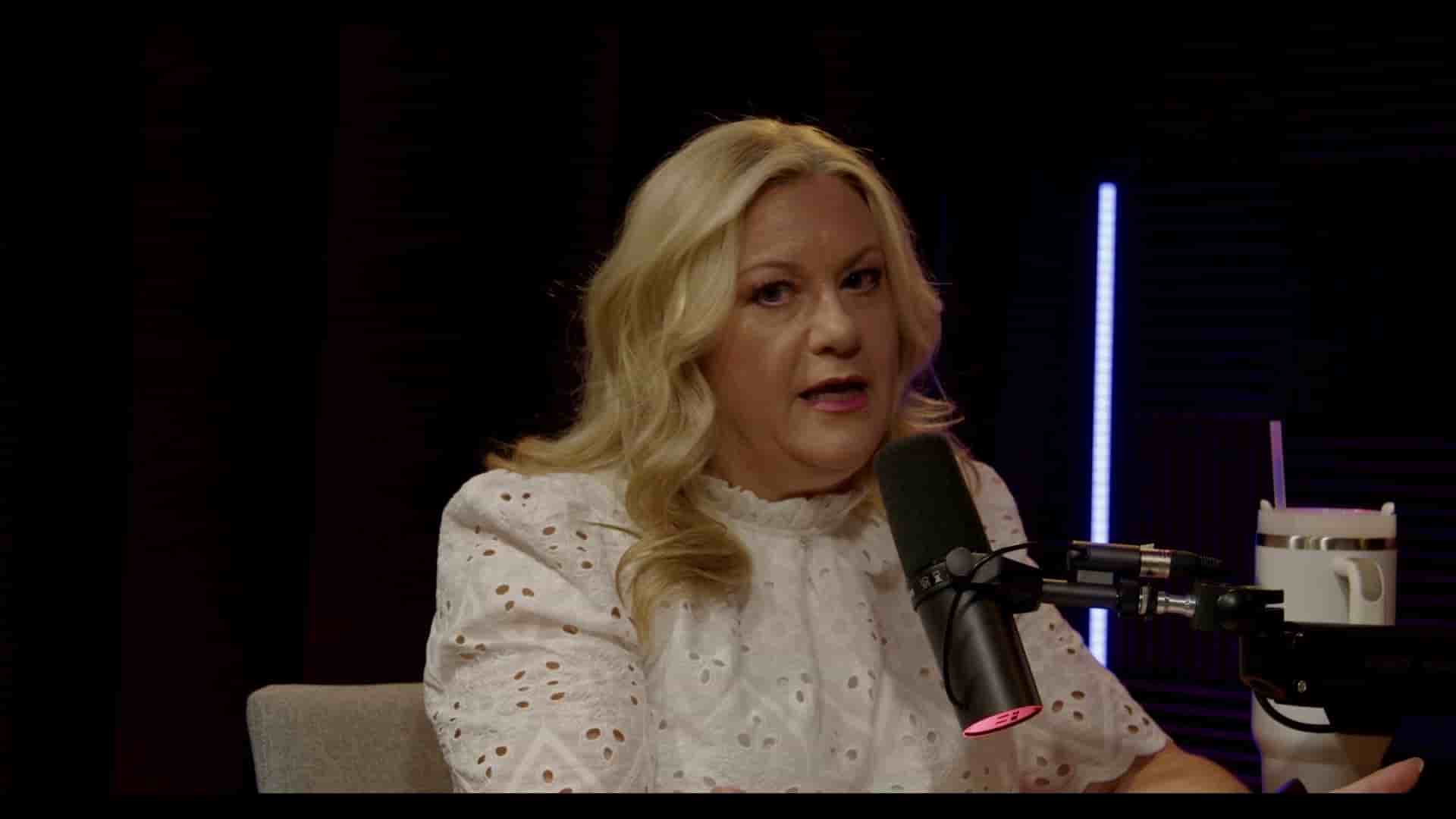
Pastors Todd and Katie argue that spiritual growth stalls when people skip the small, unglamorous steps God actually requires of them.
Most people who want a greater anointing haven't handled the one they already have. They show up to prayer lines asking for the double portion while ignoring the quarter portion sitting untouched in front of them. The gap between where someone is and where they want to be isn't usually a lack of gifting or opportunity — it's a refusal to do the ordinary, unsexy things the Holy Spirit has already pointed toward.
That's the core of what Pastors Todd and Katie keep circling back to: spiritual maturity isn't something you receive, it's something you build through the same kind of incremental faithfulness that works in every other area of life. And the most common obstacle isn't open rebellion. It's impatience dressed up as spiritual ambition.
If you can't be entrusted with natural things, how would you be trusted with the true riches?
The analogy that keeps coming up is a plant. Trees don't uproot themselves every season to find better soil. They develop their root systems precisely because they stay put. A lot of people in ministry, in business, in faith — they keep restarting. New church, new job, new city, new spouse. Each restart feels like fresh momentum, but it's actually just the avoidance of whatever God was trying to build in the last place.
"The Lord plants us in a place, in a calling, with people in our life to actually cause us to grow. That's what plants do right — they grow when they can stay planted."
What changes isn't the location. What changes is the person. And because maturity is gradual, it also changes what you can see. There's a recurring image here of a child riding to school every day, only noticing things along that familiar route years later that were always there. The harvest field was always there too. The problem isn't that it's hidden — it's that you're not ready for it yet. You're still snacking on candy corn when the real corn is waiting in the field.
Paul's encounter on the road to Damascus is often framed as a dramatic conversion, and it was. But there's something specific in Acts 9:6 worth sitting with. Trembling and astonished, Saul asks: Lord, what do you desire me to do? Not: here's what I'm thinking, or here's what I'm gifted for, or here's what seems logical given my background. The Lord's response was equally pointed: arise, go to the city, and you will be told what you must do.
Not what you want to do. What you must do.
It took an encounter with God before Saul had the maturity to ask the right question.
Many people haven't had that depth of encounter, and yet they're already running a plan. They pray, but mostly to talk — to pour out what's on their heart, to ask for things — without leaving space to actually hear. The listening part, the waiting, the praying in the spirit while quieting the mind: that's where the actual assignment comes from. You can be busy doing genuinely helpful things that still carry no anointing, because the anointing follows what God called you to, not what seemed like a good idea.
One of the more useful frameworks in this conversation is how spiritual tests work across different levels of maturity. It's not that you pass a test once and it's done. Fear, offense, stewardship, keeping your heart right toward people who irritate you — these same categories of testing show up again and again, but at higher stakes each time. What passed as adequate faithfulness at one level won't be enough at the next.
"The test to get your PhD is at a different level than your high school final exams. Least should be right."
So when someone says "I already dealt with that pride issue," the honest response is: maybe. But you're about to deal with a harder version of it. The people who think they're exempt because they handled it at a lower level are usually the ones most blindsided when it comes back around bigger.
Letting go of petty things is one of those recurring tests. It sounds simple. It isn't, because at the time, whatever you're holding feels absolutely vital. The one-dollar bills in the offering buckets were always crumpled — like someone had squeezed them in their fist before finally releasing them. The hundred-dollar bills came in crisp. The willingness to let go reflects whether you actually believe something better is on the other side.
Todd and Katie spent years serving under another ministry before planting their own church in Johnson City. They shut down their own ministry entirely — World Impact Ministries — because double vision and full commitment can't coexist. When people would reach out and say, you should start doing what you used to do again, the answer was no. When someone asked if they could request permission to do something on the side, the answer was still no.
"If you'll be faithful with that which belongs to another, God will give you your own."
That season wasn't comfortable. The desire to do more was very much alive. But they understood that the blessing they needed for their own assignment later was being seeded during that period of submitted service. Much of what they now do — television, podcasting, live broadcast, media — they learned in Tampa, often pushed into it before feeling ready.
The practical payoff was visible later in ways they couldn't have predicted from inside it. Their kids absorbed things during those years that are still bearing fruit. The harvest came in fields they didn't even know they'd been sowing in.
If impatience is what keeps people from going deep, offense is what drives them out before the work is finished. You can't get mad at the structure you're operating in. You can't let the limitations, the small frustrations, the things that don't run the way you'd run them — none of that gets to have a hold on you. Because every bit of energy that goes into nursing offense is energy that isn't going into the actual assignment.
The discipline of taking thoughts captive isn't a metaphor. It's a daily, sometimes hourly, practice of stopping a mental loop before it gains momentum. Hear something that triggers you, and the choice is immediate: let the reasoning build until you're genuinely angry at something that doesn't matter, or interrupt it, hand it over, and come back to what you're actually supposed to be doing.
Get rid of offense. Don't let it be a part of any part of your life at all.
That narrow line is real. There isn't a lot of leniency, and pretending otherwise doesn't make it wider. Whatever isn't faith isn't pleasing to God, which means there's no neutral ground to drift on. You're either locked into what God said, or you're doing your own thing and calling it spiritual.
The Moses account from Exodus 3 is the closing image, and it's worth taking seriously. Moses was on the job — tending Jethro's flocks — when he noticed the burning bush. Desert fires weren't unusual. Dry shrubs catch. But something about this one was different, and Moses made a choice: I will now turn aside and see this great sight.
The text notes that God called out to him when the Lord saw that he turned aside to see. Which raises the question: if Moses hadn't stopped — if he'd logged it mentally as something to check on later when he had time — would the encounter have happened at all?
The burning bush wasn't the supernatural moment. Turning aside was. The same principle holds now. God does something that seems almost natural, but there's a small internal signal saying pay attention, this is different, this is for you. The people who stop and look are the ones who get the conversation. The people who stay busy miss it entirely.
You have to stop your natural progress, sometimes in the middle of a job you're responsible for, to notice what God is actually doing. Not because he's hiding, but because paying attention is part of what he's looking for.