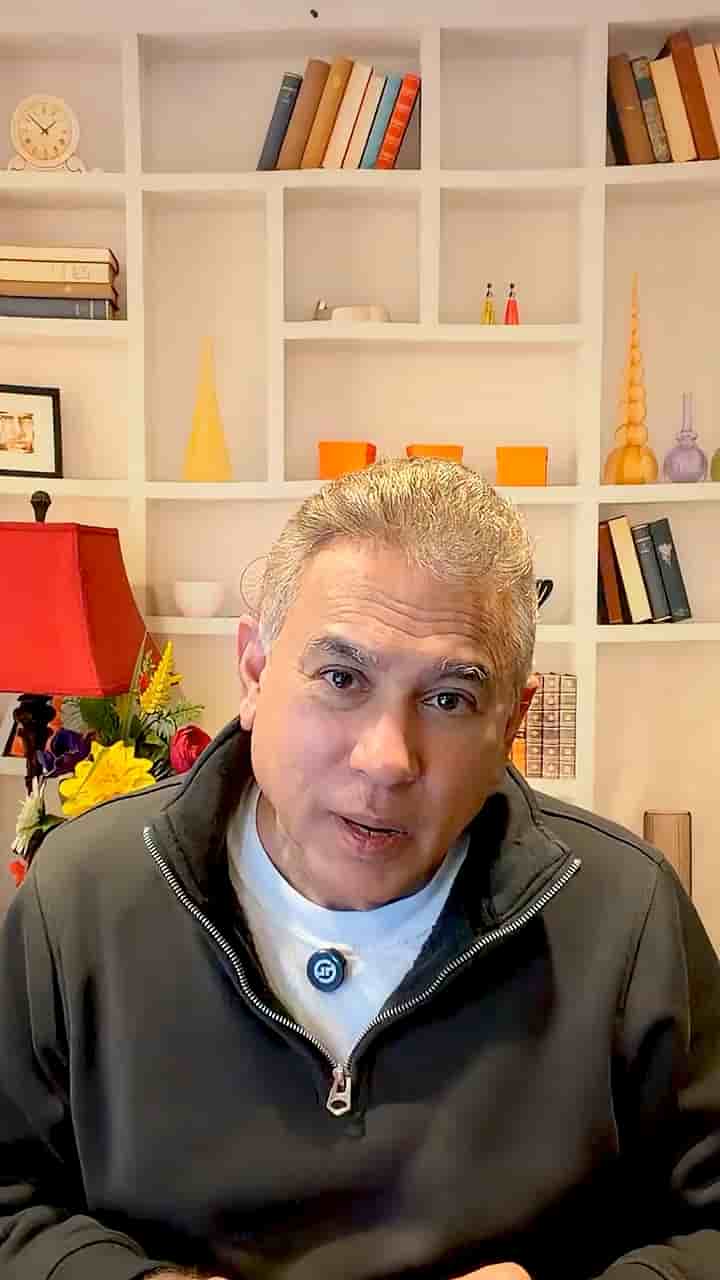
Faisal Hasnain asks why a planet of 8 billion people has no single leader, and lands on a simple answer: the powerful won't give up even 1% of their power.
Every company has a CEO. Every country has a head of state. But the planet — home to 8 billion people, bound together by trade, technology, and shared crises — has no one. No single person who can say, "Okay everyone, let's behave."
It sounds like an obvious gap when you put it that way. And yet here we are, stumbling along with over 2 billion people lacking basic sanitation, clean water, healthcare, food security, and justice. A sneeze in one country becomes a crisis in another. Nothing is isolated anymore. So why is the one institution that could coordinate a global response — a genuine president of Earth — considered too radical to even discuss seriously?
The benefits would be extraordinary, but the chances? Zero, my friend, less than zero.
On paper, Antonio Guterres, Secretary-General of the United Nations, should be the world's leader. The UN exists precisely for this kind of coordination. But the powerful nations that fund and control it won't let him lead in any meaningful sense. Table a resolution giving the Secretary-General real authority, and it will get "politely noted" before discussions are quietly redirected to something safer, like electric vehicle standards.
The problem is structural and entirely human. Any real global leadership requires the powerful to surrender a small slice of their power. But they will hold on like it's the last ounce of gold. That calculation doesn't change regardless of how urgent the problems become.
Real global leadership requires the powerful to give a small part of their power. But they won't.
Picture what genuine global cooperation might produce. Health, education, poverty, and food security tackled collectively rather than duplicated across 195 separate national agendas. Space exploration run through one unified agency instead of 70 competing ones. A mission to Mars becoming a mission for humanity rather than a race for bragging rights between nations and billionaires.
The benefits are not speculative. They are knowable and large. The obstacle is not technical or logistical. It is the unwillingness of those with power to share it.
"A country without a leader? Unthinkable. But our entire planet has no single leader."
Some ideas stay dreams not because they are impossible, but because the people who would need to act on them refuse to. That distinction matters. It means the failure is a choice, not a law of nature.
Still, the act of imagining it has value. It reminds us of what could exist if we ever chose collaboration over competition. The gap between what we have and what we could have is not hidden. It is on display every time a global crisis outpaces the fragmented, slow-moving institutions trying to respond to it.
We live in hope. However tiny that may be.