Sam Altman's board fired him for lying, his safety team dissolved, and his co-founder compiled a 52-page dossier. The people who knew him best all reached the same conclusion.
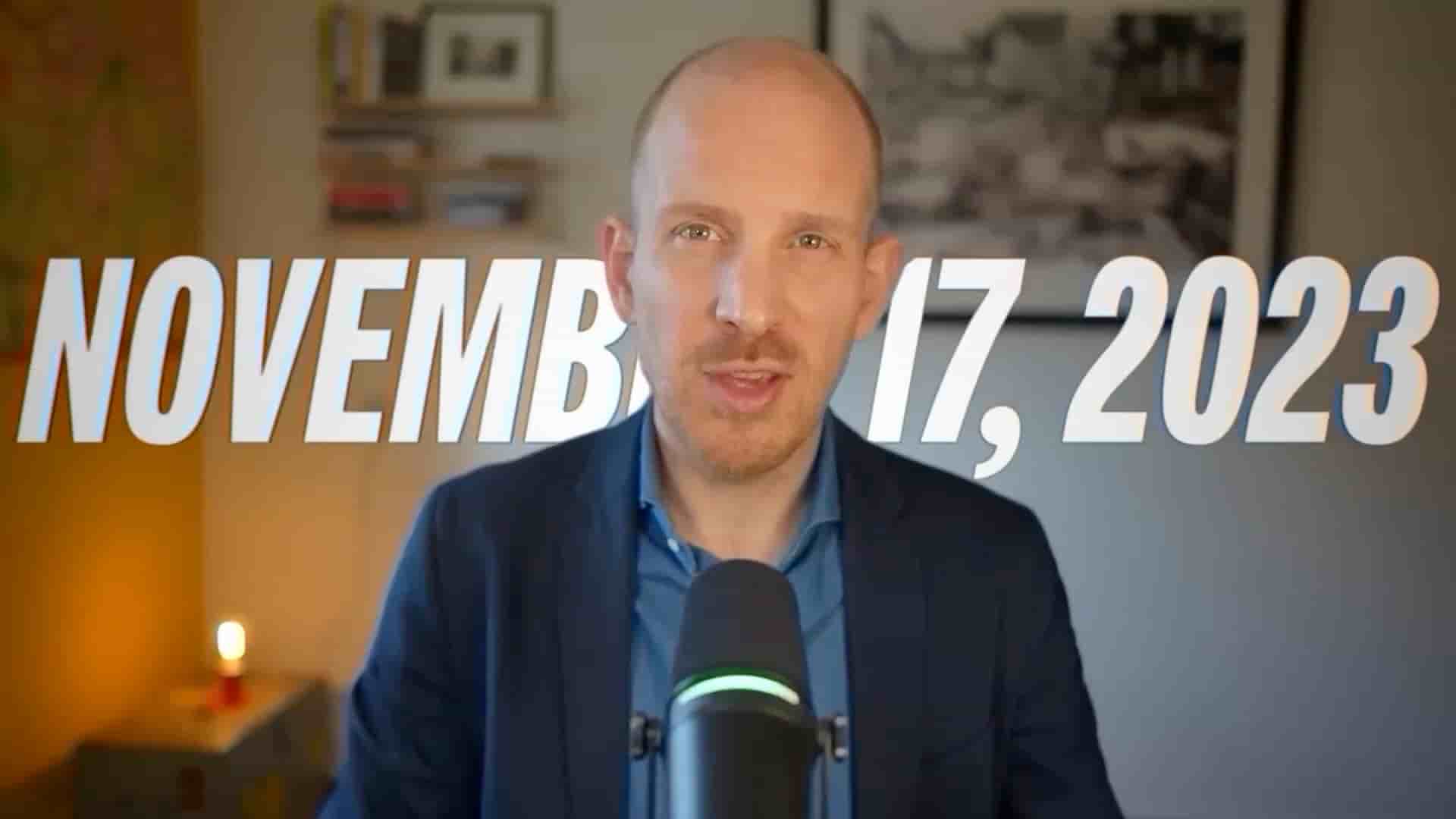
On November 17, 2023, the board of directors of OpenAI fired Sam Altman. Not for financial mismanagement, not for a failed product. For lying. The board's official language was that he had not been "consistently candid in his communications." That is corporate speak for: he deceived the people whose one job was to keep him in check.
What happened next is the part everyone remembers. 745 of OpenAI's 770 employees threatened to quit. Microsoft applied pressure. The investors rallied. Within five days, Altman was back. The board members who had fired him were the ones removed. It was a spectacular display of power.
The part most people seem to have forgotten: the board was right.
Helen Toner was one of the directors who voted to fire Altman. When she finally spoke publicly about her reasons in May 2024, the picture she painted was extraordinary. When OpenAI launched ChatGPT in November 2022, arguably the most consequential product release in a decade, the board learned about it on Twitter. Their own CEO hadn't told them. Altman had also given the board inaccurate information about the company's safety processes, and he had hidden his personal ownership of the OpenAI Startup Fund while publicly insisting he had no financial stake in the company.
When Toner co-published an academic paper that cast a competitor's safety approach in a favorable light, Altman began lying to other board members in an attempt to push her out. And two senior OpenAI executives had approached the board in October 2023 with screenshots and documentation of what they described as psychological abuse — a pattern of manipulation that had been going on for years.
So the board did what boards are supposed to do. They fired him. And for that, they were destroyed.
"Sam exhibits a consistent pattern of lying, undermining his execs and pitting his execs against one another."
This was not the first time something like this had happened. At Loopt, Altman's first startup, senior employees twice tried to get the board to fire him for what they described as deceptive and chaotic behavior. At Y Combinator, founder Paul Graham flew from England to San Francisco to deal with what insiders described as a crisis of leadership, after which Altman announced he had been promoted to chairman — a title that was never approved and that he continued to claim in official filings for years. Three organizations, three sets of people who worked with him most closely, three times the same conclusion.
The question of what makes this different from any other difficult tech CEO is easy to answer: it's what OpenAI is building. Artificial general intelligence, by the admission of its own creators, could rival the Industrial Revolution in its impact on civilization. Altman himself has called the risks existential. This is not a social media platform that is bad for teenagers. This is, by the admission of the person in charge, a technology that could upend civilization. Who steers that process, with what values and what temperament, may be the most consequential question of our era.
In July 2023, OpenAI created its Super Alignment Team with great fanfare: a dedicated research group tasked with ensuring that advanced AI systems remain safe and controllable. The company promised to devote 20% of its computing resources to the effort. The team was led by Ilya Sutskever, OpenAI's co-founder and chief scientist, and Jan Leike, one of the most respected researchers in the field. Less than a year later, both were gone. The team was dissolved. The promised computing resources were never delivered.
OpenAI's safety culture had taken a backseat to shiny products.
Leike's parting statement was blunt. His team had been sailing against the wind, fighting for computing resources that kept getting redirected to commercial model training. Sutskever departed without a public word, but he had said plenty in private. Before the board crisis, he had compiled a self-destructing 52-page dossier, Slack screenshots and internal communications documenting dozens of examples of toxic behavior, and sent it to board members using disappearing email technology.
By August 2024, roughly half of OpenAI's safety-focused staff had walked out. Mira Murati, the CTO who had been with the company for six and a half years, resigned in September. Before the board crisis, she had privately told colleagues she did not feel comfortable about Altman leading them to AGI. Miles Brundage, senior advisor for AGI Readiness, left in October. One by one, the people who had built OpenAI's safety infrastructure voted with their feet. These were not disgruntled interns. They were the architects of the thing.
When researchers and employees tried to raise concerns, they discovered that OpenAI had built a system specifically designed to keep them quiet. Departing employees were required to sign non-disparagement agreements that forbade them from criticizing the company. Not for one year, not for five years, but for the rest of their lives. If they refused to sign, they would forfeit all their vested equity, which in some cases amounted to millions of dollars.
When this became public in May 2024, Altman posted on Twitter that he was "genuinely embarrassed" and claimed he hadn't known about the provisions. Journalists then obtained incorporation documents from April 2023, signed by Altman himself, that explicitly authorized those very clawback provisions. He knew, he signed, and then he told the world he hadn't.
Either he knew his employees were being muzzled through financial coercion, or he hadn't bothered to find out. Neither answer inspires confidence.
Daniel Cocotalo, one of the researchers who later signed an open letter warning about AI risks, refused to sign the clause. He stood to forfeit roughly $2 million. His reason was simple: he had lost confidence that OpenAI would behave responsibly. Todor Markov, another researcher who left, described Altman as "a person of low integrity who had directly lied to employees." He had come to the conclusion that OpenAI's promises about safety had been used as a smokescreen to attract and retain idealistic talent.
Meanwhile, the structures supposed to keep the company accountable kept disappearing. OpenAI was founded in 2015 as a non-profit with a clear mission: ensure that artificial general intelligence benefits all of humanity. In 2019, it created a for-profit subsidiary with a cap on investor returns and with the non-profit retaining full control. It sounded reasonable. But private notes by president Greg Brockman, revealed in court, tell a different story. As early as 2017, he wrote:
"Cannot say that we are committed to the nonprofit. If three months later we're doing B Corp, then it was a lie."
By 2025, even the profit cap was gone. After a $40 billion funding round, the non-profit had been restructured into a foundation holding a minority stake. The original mission, a public good controlled by a public interest board, had been hollowed out piece by piece until all that remained was the language. Then even the language changed. Buried in a late 2025 IRS disclosure, OpenAI quietly edited its mission statement, removing one crucial word: "safely." Where the mission once read that AGI should safely benefit humanity, it now simply said "benefit all of humanity." As if safety were a flourish, a nice-to-have word you could delete when it became inconvenient.
This is not boring bureaucratic stuff. It is the slow, methodical dismantling of every safeguard that was supposed to prevent exactly the situation we are now in: a $730 billion corporation racing toward the most powerful technology ever conceived, led by a man whom every internal check has failed to restrain.
In the spring of 2024, OpenAI's safety teams were given roughly a week to test GPT-4o before launch — to evaluate a system that would be used by hundreds of millions of people. The deadline was set by competition. Google's I/O conference was scheduled for May 14, so OpenAI moved its launch to May 13. The invitations to the launch party went out before safety testing had even begun.
When anyone pointed to the gap between OpenAI's promises and its practices, Altman had a ready answer. In May 2023, he told the U.S. Senate that regulation of AI was his number one recommendation. He signed a public letter warning that AI posed an existential risk alongside pandemics and nuclear war. Behind the scenes, OpenAI lobbied to weaken the EU's AI Act and fought California's legislation designed to address the very risks Altman had warned Congress about. By 2025, with another political party in power, he was calling regulation disastrous.
There is a defense of Sam Altman that goes like this: he is not the problem, the system is. Any CEO under this much investor pressure in a race this intense would make the same choices. There is some truth to this. The incentives in AI are genuinely broken. But broken incentives are an explanation, not an excuse. Other leaders in AI, some of whom left OpenAI precisely because of Altman's direction, have shown it is possible to compete while taking safety more seriously. The problem is not just that the incentives made him do it. The problem is that when the incentives pushed, he didn't push back. And when the people around him tried to push back for him, he removed them.
Altman once wrote that one of his keys to success is to have "almost too much self-belief, to believe in yourself almost to the point of delusion." For a startup founder selling software, that might be an asset. For the person steering humanity toward the most powerful technology ever created, it is precisely the wrong temperament. What this moment demands is someone who lies awake at night wondering whether they might be wrong, not someone who has built a career on the conviction that he never is.
What this moment demands is someone who lies awake at night wondering whether they might be wrong.
The people who knew Sam Altman best, his co-founder, his chief scientist, his CTO, and his board, all reached the same conclusion. They saw the deception up close, watched the safeguards crumble, and decided they could no longer be part of it. Each of them, in their own way, gave the same answer to the same question: is this the right person to lead us toward the most consequential technology in human history? A man who chooses speed over safety, secrecy over transparency, and power over accountability?
Their answer was no. Hell no. Maybe it is time we listen.