Two tech enthusiasts explore AI security threats, digital sovereignty, and why robotics might reshape every job we know.
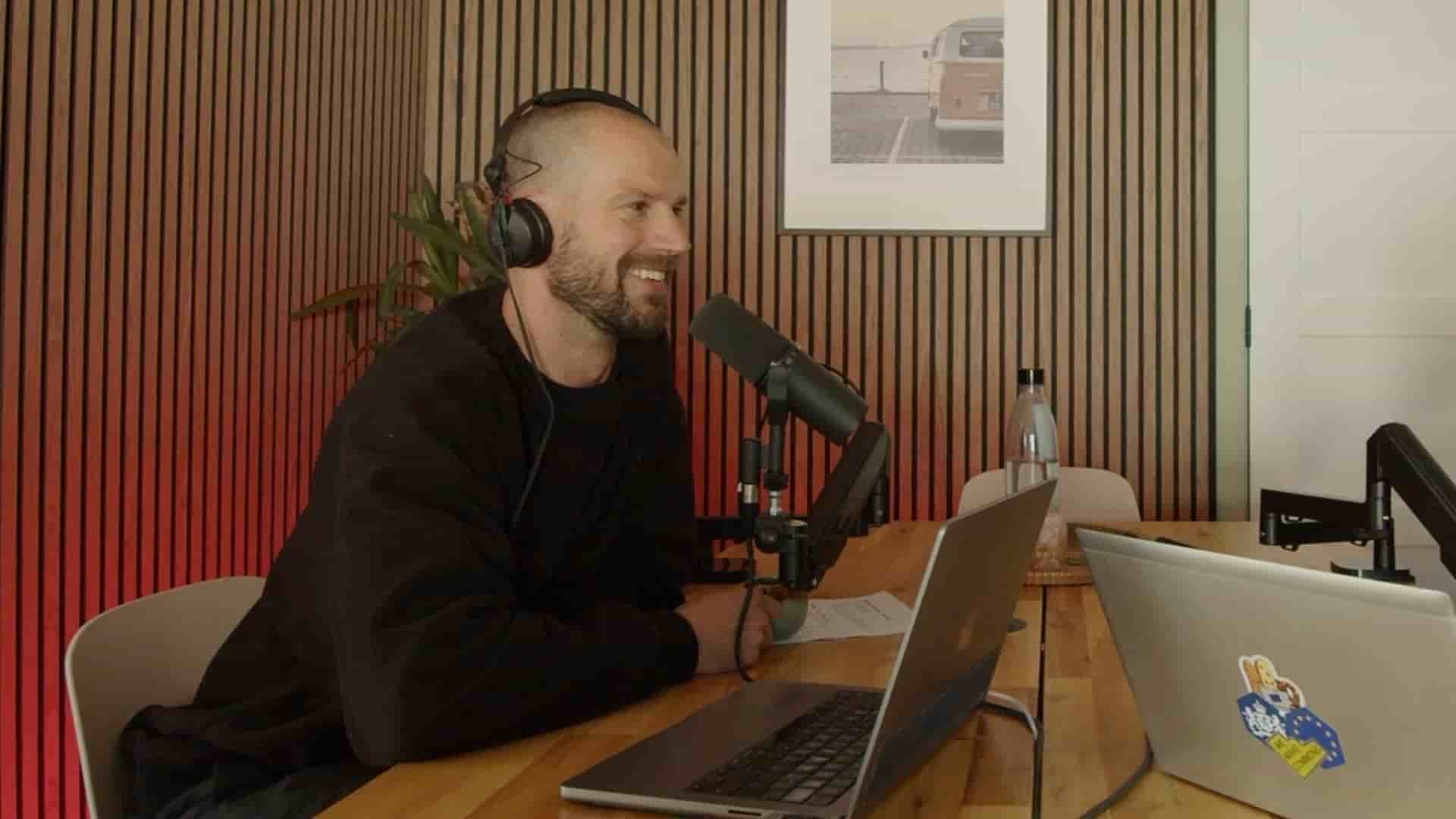
Starting a podcast at 40 is apparently a rite of passage, like buying a sports car or taking up golf. Frank and Jacco laughed about this cliché as they sat down in the baroque house of the St. Janskerk in Breukelen for their first episode. Frank, a self-proclaimed tech nerd who runs the video editing app Detail and DJs techno on the weekends, brings the technical perspective. Jacco works in the public sector with a focus on digitalization of society. Together, they're trying something a bit different: creating space for substantive conversations about technology, science, and society without the usual marketing fluff.
Their timing is interesting. We're living through a period where technology is advancing faster than our ability to process its implications, and both hosts feel this acutely in their respective worlds.
Frank opened with something that had been keeping him up at night. An AI model called Mythos had identified 271 zero-day vulnerabilities in Firefox in a single night. These were previously unknown security flaws, the kind that hackers dream about. The company behind the model, Anthropic, made the unprecedented decision not to release it publicly.
"What happens when this falls into the wrong hands?" Frank wondered aloud. "It's bizarre for critical infrastructure."
This is like someone who developed an atom bomb and now has to deal with people who shouldn't have access to it.
Jacco's response was measured but sobering. He's spent years thinking about these exact scenarios, first at the AIVD (Dutch intelligence service) and later as a member of parliament for the New Social Contract party. "I always ask, are we as humans wise enough to handle this kind of intelligence? And I'm afraid the answer is no."
The conversation quickly turned practical. To get perspective, they called Jesse Klaver, a former colleague of the prime minister who worked at the AIVD and later served in parliament, now at a digital think tank.
Jesse picked up quickly, his voice warm but serious. After some friendly banter about when the podcast would actually launch, they dove into the Mythos situation and broader questions about AI security.
The model works somewhat like crypto mining, Jesse explained. Big tech companies (Amazon, Apple, Google) participate in something called Project Glasswing, essentially competing to find vulnerabilities. When they discover flaws, they can alert companies to patch them before hostile actors exploit them. It's a kind of defensive arms race.
But here's the problem: who exactly is "you" in this scenario? Is it a company? A government? The biggest cybersecurity threats come from Russian, Chinese, and Iranian state hackers. Jesse doubted they're using Mythos extensively yet, but the power dynamics are shifting rapidly.
"The Netherlands cannot build the whole country full of data centers," Jesse noted matter-of-factly. "We don't have the room or energy. But there's a different story for China and Russia."
The technical terminology got interesting here. In cybersecurity, there are "red teams" (attackers) and "blue teams" (defenders). Companies can deploy AI models preventively to find and patch vulnerabilities before bad actors discover them. This gives defenders an advantage because there's no internal source code exposed externally.
But Jesse pointed out a critical vulnerability in this approach: not all companies have the capability to patch quickly enough. AI models can simultaneously identify all possible attack vectors across vast systems. A few companies, those with the most advanced AI capabilities, could end up controlling huge portions of the security market.
For digital autonomy, this presents a serious challenge.
This consolidation of power worried all three hosts. The conversation kept returning to a central tension: how do you balance the need for cutting-edge defensive capabilities with the imperative for digital sovereignty?
The discussion naturally flowed to Solvinity, a current political flashpoint in the Netherlands. The previous day, a motion had passed with an overwhelming 141 votes calling for the government not to renew a contract if the takeover proceeded. It was a rare moment of nearly unanimous parliamentary action.
Jesse explained that motions aren't binding instruments, but when parliament speaks with such a strong voice, the cabinet typically follows. "The Kamer, the parliament, is the highest organ controlling the government," he said.
What struck Jacco was how this represented a broader trend: politics exercising tighter control over how critical services are outsourced. "I think this is a positive development," Jesse added.
But there's always uncertainty. A kort geding (summary proceeding) was scheduled, and nobody could predict how judges would rule. The narrative has shifted in parliament and society, but that doesn't guarantee the judiciary will follow.
When asked how the United States views Mythos usage, Jesse was characteristically cautious. "I don't think there's a government that speaks with one voice. Every department has a different perspective."
The real question, he suggested, isn't about blocking individual models. It's about building strategic capabilities domestically. The Netherlands needs to develop its own expertise in artificial intelligence and cybersecurity, but simultaneously avoid a situation where the entire government depends on foreign companies like Anthropic without sovereign alternatives.
"If a model from Anthropic or another AI company has vulnerabilities that affect our digital infrastructure, it's very important that we have relationships with those companies or with IT security vendors who can identify those flaws," Jesse explained. They need to be patched before hostile hackers exploit them.
The balance is delicate: maintain relationships and access to cutting-edge tools while developing independent capacity.
Frank shifted gears to something that had been troubling him personally: the future of work. His son had been studying media design when every designer at his internship told him the same thing: "Don't do this. Your job won't exist in ten years."
That conversation prompted a complete pivot. His son switched to training at the Hout en Meubilerings College (Wood and Furniture College), learning to work with his hands as a carpenter. Frank had told him it was a smart choice. "You've learned a real trade."
Then Frank attended Fair Plus, a major robotics conference in Shenzhen, China. Watching the demonstrations, he had an unsettling realization. If robots could already place dots on a bottle with precision, then in 10 to 15 years, with continued AI advancement, couldn't a bus full of humanoid robots show up to build your house?
"Ninety percent of jobs are absolutely going to disappear eventually," Frank said. It sounded dramatic, but he wasn't trying to be pessimistic. He'd seen the trajectory up close.
Jacco had witnessed the same technology at Terraform, a company that shared office space with Frank's startup. Walking past the metal robots every day on his way to his office, seeing the technological curve accelerate so dramatically, he'd come to the same conclusion. "We're really just at the beginning."
The business model is already shifting. Instead of buying robots, companies are buying services. Large contractors can essentially subscribe to robotic labor, downloading software upgrades like Tesla updates.
Then there's a bus with humanoid robots and they're going to build your house.
What makes digitalization unique in politics, Jacco observed, is how often parties agree across traditional divides. Many motions pass with support from all parties, which is quite rare in other policy areas.
"Digitalization and digital independence, that's crucial for the government, for citizens, but also for democracy," Jacco explained. People like Barbara Kathmann and Jesse have been exceptionally active on these issues, and that's a real victory regardless of whether you're left, right, red, blue, or purple.
We all deal with digitalization. There's no escaping it unless you go completely offline, which is a podcast for another day.
Jesse had remained in politics for about two years. When asked about the experience, he was candid: "It's like running a marathon through a swamp. You have to be trained for it, conditioned to persevere."
But now, working at the digital think tank, he has a different kind of freedom. He can focus on bringing technological issues to decision makers without the constant political maneuvering.
As they wrapped up their pilot episode, Frank and Jacco talked about what they're trying to build. They want to create a filter, bringing interesting topics and voices to people who might not otherwise encounter them.
Jacco wants to invite someone who can explain quantum technology in accessible terms. Frank is curious about nearly everything. The common thread is technology and science viewed through the lens of what it means for humanity.
The format will be conversational but substantive. They'll call experts like they did with Jesse. They'll dive into current events. They'll bring in guests for longer conversations. The agenda stays open because that's what makes it interesting.
"I'm aware of everything just a little bit," Jacco joked. "I'm interested in people who know a lot about specific things. Let's give them a podium."
It's a working title (currently "What's Going On"), a work in progress, an experiment by two guys who find this stuff endlessly fascinating. If they're happy with it, they'll keep going. If not, at least they tried.
For now, they've just scratched the surface of questions that will only become more urgent: How do we navigate an AI arms race? What does digital sovereignty actually mean? And how do we build a future where technology serves democracy rather than undermining it?
These aren't abstract questions. They're shaping policy decisions today, employment prospects tomorrow, and the fundamental structure of society for decades to come.