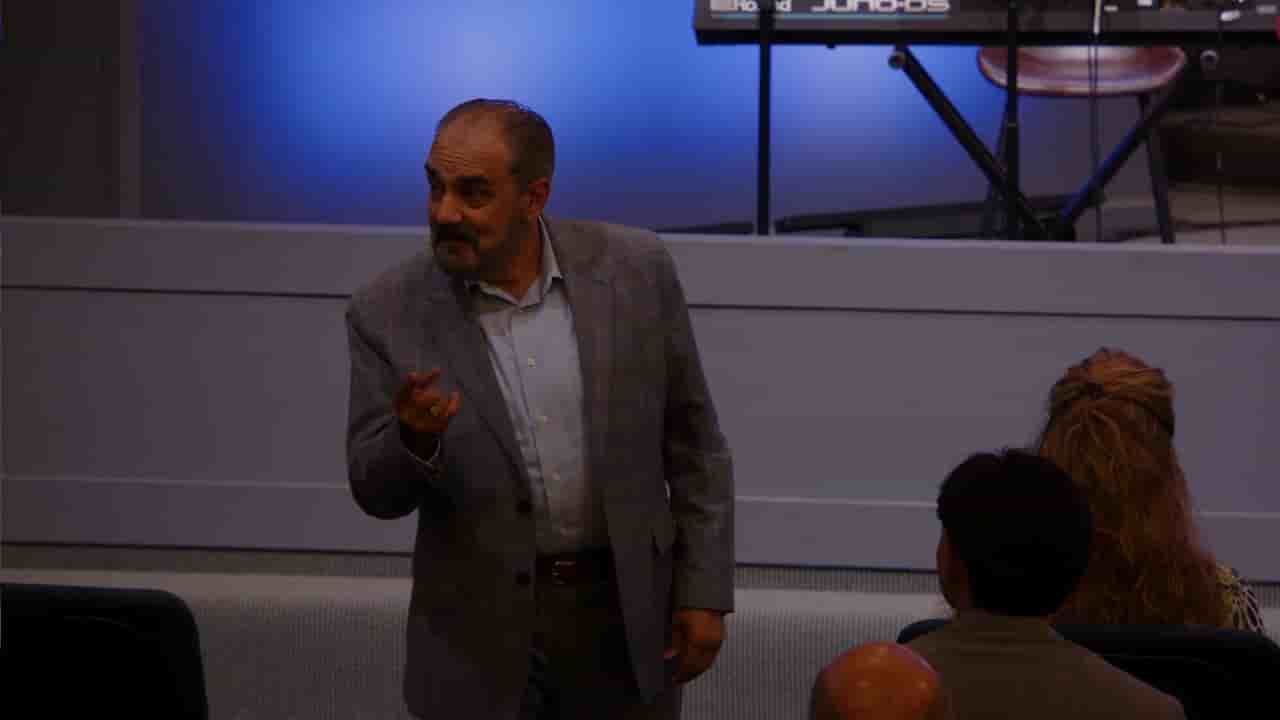
Built on Job 22:28 and decades of lived theology, this message makes the case that believers are wired to win and the only way to lose is to give up.
Heaven is not the final destination. That might sound surprising, but the teaching is clear: after heaven, we come back. And that changes everything about how we're supposed to live right now.
The comparison is to vacation. Right before you leave on a trip, you're working harder than you've worked all month — tying things up, making sure everything is in order. That's exactly what this season looks like for the kingdom of God. Jesus told his followers to occupy until I come. That word — occupy — is not passive. It's ground-taken, ground-held, forward movement. The idea that believers should coast toward heaven while everything around them slides doesn't hold up against that instruction.
I will not lose and I will not give up.
Growing up with a hip condition, on the smaller side, told regularly that certain sports or activities weren't for him — the message received from the outside world was you probably can't. The response that formed early was a kind of holy stubbornness: the harder something was, the more likely he'd show up for it. Easy things were boring. Difficult things were invitations.
What he didn't fully understand as a young person was that the determination driving him wasn't just temperament. It was something placed there by God. A holy determination. The conviction that you don't settle, you don't make excuses, you don't accept the smaller version of what you were created to be.
The more difficult it was, the more apt it was that I was going to show up.
Believers, he argues, carry the DNA of the overcomer. Not because of personal toughness, but because of what Christ obtained and then handed over. The illustration he uses is vivid: imagine a heavyweight boxer who slugs through twelve brutal rounds, wins the championship, comes home bruised and bloodied — and hands his wife the $20 million check. She didn't take a punch. She got all the benefits and none of the bruises. That's "more than a conqueror." Jesus fought. He won. The victory was passed along.
Job 22:28 says to decree a thing and it shall be established. The word established matters here — something is built, something comes forth from what would otherwise be nothing. And the creative power of words isn't poetic language. It's the same principle by which God spoke the world into existence through Christ, the Word. That creative capacity is still active, and it operates through what believers speak.
Isaiah 55 extends the picture: just as rain comes down to water the earth and accomplish the plan of seed time and harvest, God's word goes out and doesn't return empty — it prospers, it produces, it doesn't just sit there on the ground like an unplanted seed.
The practical implication is direct: stop lining up your words with unbelief. Stop praying soft, hedging prayers that leave room for God not to move. When you've received a word from God, it's meant to come out of your mouth. Faith says what He says, not what you think or how you feel. Feelings can be real without being true — facts change with the temperature, but truth is constant, and God's word is truth.
"Just because I feel it doesn't make it true. It can be factual, but truth is the word of God."
This distinction between facts and truth is one of the most practical things in this message. Your situation is a fact. Tomorrow it can be different. What God says about your situation is truth — and that never changes. When you decree according to that truth, you're not being naive. You're being precise.
One of the clearest and most direct points in the message: faith is not activated by your thoughts. Thinking about something, analyzing it, weighing it from every angle — that process doesn't produce faith. It crowds faith out. Eventually you get to the place where you've thought about it so much that you don't even believe you can do it anymore.
Mark 11:23-24 doesn't support non-producing declarations or non-producing prayers. It says speak to the mountain, believe, don't doubt in your heart, and you will have what you say. That's not a possibility. That's a promise with conditions attached — and the conditions are speech and belief, not analysis.
Believe that you receive them and you shall have them.
The instruction when God speaks is instant obedience, not a committee meeting in your own head. God's word drops into you, faith is there — and the activation mechanism is obedience, not processing.
He lays out five specific reasons why, as a believer walking in the word, losing is actually not an available outcome:
A phrase he picked up in the early 1980s and has declared over his life for decades: I am created for accomplishment, engineered for success, and endowed with seeds of greatness. Not based on natural ability or family background — based on the seed of God's word planted inside, producing things that couldn't be produced any other way.
I am created for accomplishment, engineered for success, and endowed with seeds of greatness.
The victim mentality gets no ground here. People have taken advantage of him. Knocked him down, physically and otherwise. He's walked through the School of Hard Knocks and collected more than a few bruises from it. But none of that makes you a victim unless you take on that identity. You weigh everything you're told against the word. What lines up, you receive. What doesn't, you reject — regardless of how much pressure gets applied to make you comply.
The world bullies. It tells you to comply, to accept, to take what's being handed out. The response is simply: no. God is the supply. The word is the standard. And if you don't give up, you can't lose — because the victory was secured before the fight ever reached you.
Tonight's follow-up message promises to go deeper into how to never give up. Because that's the only condition that needs to be met. All the blessings, all the strength, all the rewards — they're already there. You just have to not quit.