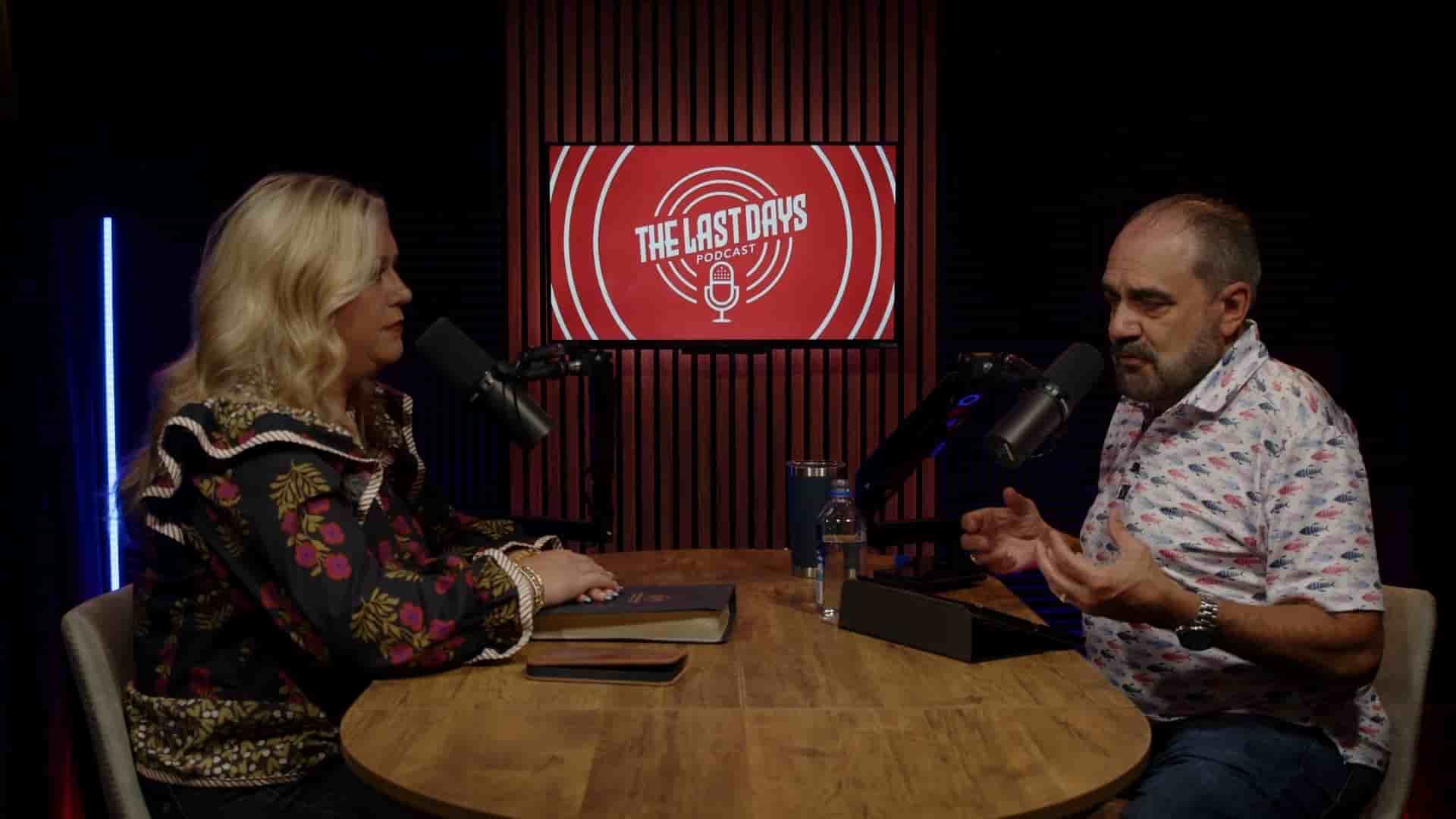
Todd and Katie make the case that faith has no storage mode: you either keep taking ground or you slip off the cliff behind you.
There is no retirement fund for faith. You can set money aside and live off it later, but faith doesn't work that way. Faith is now. And one of the most dangerous places a believer can land is the assumption that past victories buy them a season of spiritual coasting.
We've watched it happen more times than we can count. Someone walks through something massive, they see the breakthrough, they come out the other side — and then they just sort of settle. They think they've earned a rest. What they don't realize is that the ground behind them is already disappearing. It's like advancing to the next level in a video game: everything previous just dissolves. If you stop moving forward, you don't stand still. You fall.
Faith is now. You don't store up faith.
The enemy understands this. He looks for those key moments right after a victory, when the flesh is naturally craving relief, and he accommodates that craving. He's not loud about it. You don't feel yourself slipping. That's what makes it so dangerous. Paul even warned that someone who has instructed many could still become a castaway — no longer effective, no longer in the game. Nobody is exempt from this. You can know the Hebrew, know the Greek, have a long history of conquering things, and still fall off the cliff if you decide to camp out at the last place you won.
The idea that challenges are something to endure until they stop is backwards. Joshua's generation understood something we tend to forget: the giants are bread. Bread is the basic necessity of life. Spiritually, the giants in front of you are what you actually need to advance. You need some mountains. You need some challenges out ahead of where you've been, because that friction is exactly what causes growth.
This is why telling someone facing a real trial that it's easy is actually bad counsel. When a great sports team loses to a weaker opponent, it's almost always because they went in without the right respect for what they were facing. The enemy will capitalize on any casual posture. He can tell the difference between a real declaration of faith and a shrug that says "everything will be fine." Both might arrive at the same words, but only one of them has corresponding action behind it.
The just shall live by faith — not find faith, not obtain faith. Live by it.
That distinction matters practically. Faith isn't something you pick up when a challenge arrives. It's a lifestyle. Building yourself up by praying in the Holy Spirit isn't a crisis response — it's like breathing. Your spirit prays the way your body breathes. You don't know when the enemy is going to launch a surprise attack, and you can't build your strength fast enough in the moment it arrives. You stay strong ahead of the need.
A lot of believers, even Spirit-filled ones, let days or weeks or months go by without praying in the Holy Ghost. That's a real problem. Praying in the Spirit quiets the noise of the mind, builds up your inner man, and positions you to actually hear the voice of God. People who say they haven't heard from God in a long time often haven't made that space.
Building yourself up on your most holy faith, praying in the Holy Ghost — you don't know when you're going to need to be supernaturally strong.
When you pray in line with the Word and keep your spirit as king, your soul follows. Your flesh follows. It's not that the flesh never has to be dealt with, but a strong spirit dramatically reduces the struggle. The servant goes with whoever is sitting on the throne. Keep the right one on the throne and the rest falls into order. This is why Jesus said to take up your cross and follow him — you follow him by spirit, and your flesh stays where it belongs.
Speaking the Word out loud matters too. Angels respond to the Word of God. They can't operate outside of it. When you keep the Word in your mouth, you're not just building your own faith — you're commissioning help you can't see.
One of the things that limits believers more than they realize is being strong in only one area. A diamond's value is real before it's ever cut, but it takes friction and cutting away to produce facets, and it's the facets that let light come through from every angle. The more facets, the more brilliant the stone.
"Find what it is that causes you to pause in your faith — that makes you suck wind — and work on it."
A basketball player who can only hit free throws isn't very useful to the team. Neither is a believer who has great faith for healing but won't get on a plane to go minister overseas, or who trusts God for everything except finances. Those weak areas don't just limit one category of your life — they cap what God can do through you entirely.
The practical move is straightforward: identify the area where you pause, where fear shows up, where you deflect rather than engage. Then do the work. Start small and concrete. If fear of the dark is real, get in the dark and declare the Word. If finances make you flinch, start building faith there the same way you'd build any other muscle — by using it. The footsteps of the righteous are directed by God, but if you're not taking footsteps, there's nothing to direct.
Don't wait for a major prophetic word before addressing something that's obvious. Some things you just know need attention. Start moving and trust that the direction will come as you move.
None of this means you never get to stand. Paul wrote "having done all, stand" for a reason. Sometimes the most powerful thing you can do is simply refuse to go backward when everything is pressing against you. Standing your ground is a legitimate position of faith. But it's not a destination. The determination underneath it has to be: I am not a pillar. I am going to move forward as soon as I can. The shield of faith can be defensive or offensive, and knowing which to use and when is exactly the kind of thing that comes with experience.
The goal is to become multifaceted, not one-dimensional. Strong in giving and in receiving. Confident in the pulpit and on the plane. Willing to take on the thing you're not naturally good at. Caleb at eighty-five years old looked at the mountain that scared everyone else and said, give me that mountain. That mountain still had giants on it. He wanted it anyway, because he understood that's how the mountain gets renamed.
Every day is a day to take ground. Every day is a day not to lose it. You cause yourself to get strong in something before you have to. That's the posture.