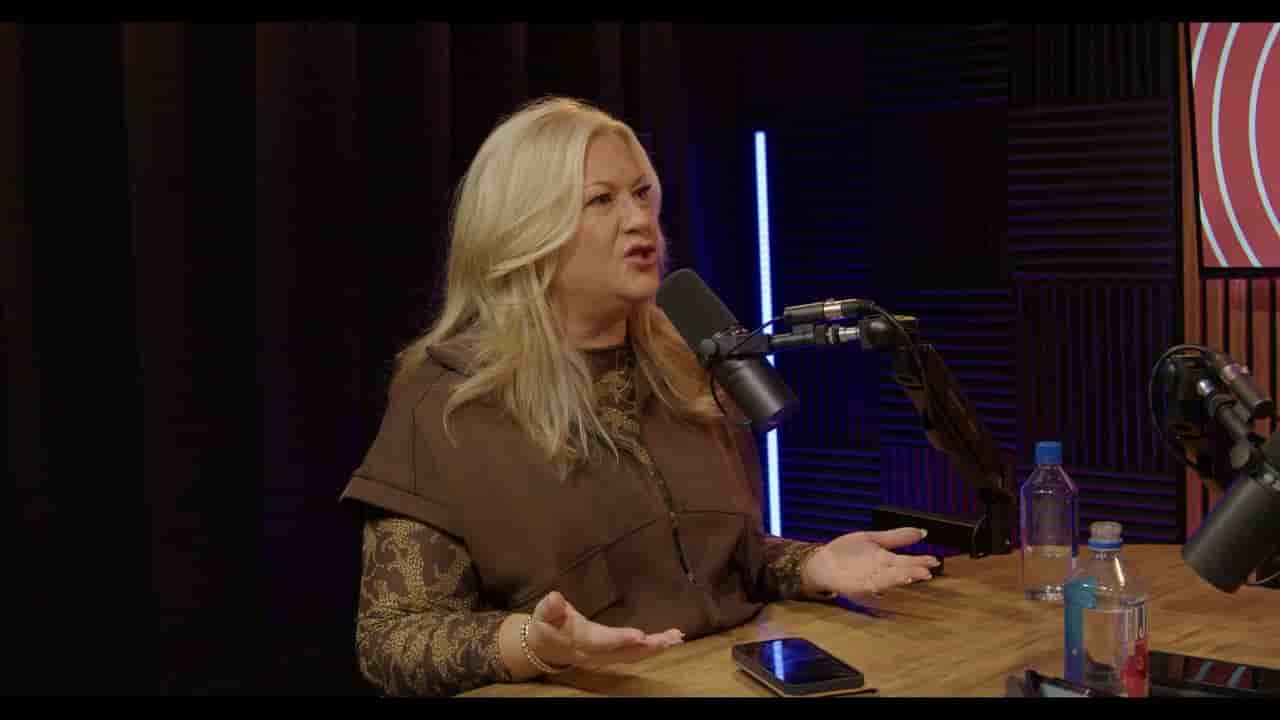
Faith without action is dead faith. Todd and Katie break down why speaking the word alone isn't enough, and what walking by faith actually requires.
Faith is not a possession. It's not something you accumulate over years of church attendance or Bible college classes. It's something you do — every day, in the direction of what the Word says, regardless of what your circumstances look like. That's the thread running through everything we're teaching here, and it matters because a lot of people have quietly confused the two.
The Bible says faith without works is dead. Which means there is such a thing as dead faith. And dead faith isn't something that happens to unbelievers — it happens to believers who started off moving and then stopped. Something was birthed out of faith, it sat there, and slowly the life went out of it because there was no continued action. Faith isn't a monument you build and then point to. It's always moving.
Faith isn't a monument. Faith is an active thing.
We both went to a faith school. Kenneth Hagin was teaching every single day. And I know people who sat right next to me in those classes, heard the exact same word, and completely missed the faith boat. Some of them are genuinely lost out on life. Same word, same environment, totally different results.
The difference isn't information. The difference is whether the Word drops from your head into your heart. There's a place it has to land — not your gray matter, not your memory, not your ability to quote a verse. Memorizing scripture is good, but it becomes effectual when it moves from a fact you know to a revelation that is alive inside you. Kenneth Hagin taught that. He called it the drop — when faith finally lodges in your heart.
Once it's there, it doesn't stay contained. It explodes out of you. It becomes part of your being. You don't just have faith in your heart; it's in everything — in your walk, in your talk, in what you attach yourself to. You can actually feel faith coming out of you. It's tangible. That's why our declarations matter so much, because when faith speaks, things line up with what faith sees. Not eventually. Now.
"The eyes of faith see the answer as already happened — not, well, eventually this is going to take place."
A lot of people treat faith like a verbal formula. They quote the word over their finances, speak increase, declare blessing, and then wonder why nothing changes. The issue is they're speaking without acting. You can talk until all your teeth fall out and nothing will shift if your actions don't line up with what you're saying.
Take finances. You can declare increase from now until next year, but if you're not sowing, the declaration alone won't produce the result. The word says sow and reap. Faith speaks, but faith also moves in line with what that word says to do. You can't quote Bible verses and ignore the corresponding action. That's not faith — that's just talk, and talk is cheap.
James 2:18 is direct about this: "Show me your alleged faith apart from any good works if you can. And I, by good works of obedience, will show you my faith." The proof isn't the declaration. The proof is the production.
Faith speaks — but it also has to move in line with what the Word says to do.
Here's something people don't like to hear: the trial is necessary. James 1:2-4 doesn't say if you encounter trials — it says when you are enveloped in them. And the reason you count it joy isn't because the trial itself is joyful. It's because you understand what the trial is producing: endurance, steadfastness, patience. These aren't optional ingredients. They're what makes you "perfectly and fully developed, lacking in nothing."
I've seen this play out in a painful way with people and healing. Someone gets a terminal diagnosis, and they assume they have the faith to overcome it. They've never doubted that. But when you look back at their life, they never activated their faith in things that weren't terminal. They handled the small stuff in the natural — took the over-the-counter medicine, waited it out, never engaged their faith. So when the big thing came, there was no muscle there. They'd never built it.
This is why we should insert faith into the small things, even when we think we don't need to. Not because God needs a demonstration, but because faith only grows when there's resistance. Just like a muscle. Three pushups is one thing; thirty with perfect form is another. The endurance to get to thirty only comes if you've been doing the resistance work all along.
Faith only grows when there's resistance.
Frustration and discouragement are not just emotional states. They're faith killers. When you're discouraged, you avoid things. You lose vision. And without vision, there's nothing pulling you forward. You think you'll come back to it when you're feeling better — but you won't. The enemy knows that discouragement keeps you from moving by faith, so he'll keep the bad reports coming. The doctor's news stays grim. The numbers don't shift. He knows that if he can keep a discouraging word in front of you, you stay stuck.
Nobody else has to see with the eye of faith for your life but you. Which means the responsibility to guard your perspective is yours. That includes who you're around. People operating in that discouraged, funky mindset tend to find each other and reinforce each other. Surrounding yourself with people who are actively walking by faith — people who are going to challenge you the same way a trainer challenges you in the gym — is not optional. It's part of the work.
Proverbs 4:20-22 gives a clear picture: attend to His words, incline your ear, keep them in front of your eyes, in the midst of your heart. And then the promise: "They are life to those who find them and health — medicine — to all of your flesh." Faith manifests in the physical. Any area of your life where you apply faith is going to flourish. The reverse is equally true: where things are shriveling up and moving in the wrong direction, look for the missing ingredient. It's usually faith that has gone dormant.
Walking is the word the Bible uses. Not standing. Not sitting and waiting for something to shift. Walking. It takes you from the place where nothing is happening to the place where everything is. That's the assignment. Every day there has to be movement — another declaration, another step, another act of obedience that says I believe what the Word says more than I believe what I see.
Jesus himself operated this way. He said he did nothing except what he saw the Father do, said nothing except what he heard the Father say. Nothing he did was to promote himself — sometimes he'd heal someone and ask them not to tell anyone. He wasn't chasing likes or building a platform. He was on assignment, moving by faith, and everything else fell into place around that.
The storm in Mark 4 tried to stop him before he got to the other side. But he took authority over the wind and waves, the disciples made it through, and what was waiting on the other side was a man who would end up carrying the gospel through an entire ten-city region. One man, delivered, sent back into his own harvest field. That man was already famous in Decapolis. People knew who the demoniac was. And when Jesus told him to go tell what God had done, his testimony was as effective as Jesus going himself.
The point isn't the storm. The point is that there was an assignment on the other side, and faith got them there.
The faith the Lord dropped into you the moment you were born again is enough. You just have to stay engaged with it. Keep declaring. Keep walking. Keep working it out. God already knew about every obstacle you'd face before you were put here on earth, and he already provided the way forward. The footsteps of the righteous are ordered. So keep walking.