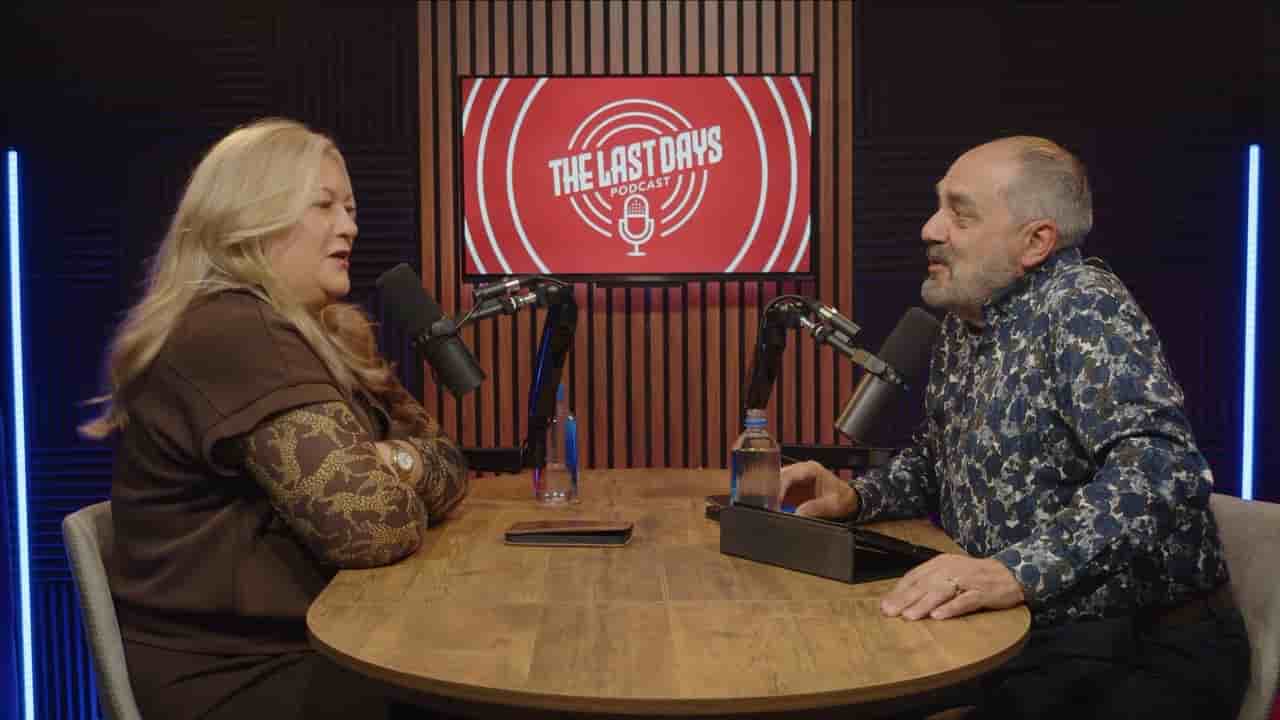
Walking by faith isn't a phase you move through. Katie and her husband make the case that faith is a lifestyle built around a daily decision to acknowledge every good thing in Christ.
The enemy of faith is not fear, not doubt, not unbelief. Those are the answers most people shout out when you ask them. The actual enemy of faith is sight. Sight is the default. It is what fights faith every single day, because we want to see it first, want the tangible thing in front of us before we commit. But the moment you require proof, you have already negated faith.
That's the heart of what we've been working through lately, both in Sunday messages and in these conversations: not just what faith is, but how to walk in it effectively. There's a difference. A lot of people believe in faith as a concept. Far fewer build their entire lives around it as a lifestyle.
One of the clearest patterns we've observed across decades of leadership is what you might call the three-year cycle. People put in real effort for weeks, months, sometimes a few years, and then somewhere around that mark, they find reasons to unhook. A different church. A different job. A different city. A new season, they'll say.
And look, sometimes God does call people somewhere else. But if you're honest with yourself and you look at the patterns, a lot of that movement isn't a leading. It's fatigue. It's the mind deciding that an acceptable length of time has been served.
There is no season of faith. It's a lifestyle, walked out every single day.
The breakthrough almost always lives on the other side of that three-year wall. The people who bust through it go to a new level. The ones who step back reset the clock and wonder later why the same challenges keep showing up.
There's a verse in Philemon, chapter one, verse six, that puts a sharp edge on all of this. It says the communication of your faith may become effectual by the acknowledging of every good thing which is in you in Christ Jesus. That word "communication" in the Greek is koinonia, which means distribution. It's how faith comes out of you, how it's produced, how other people see it and receive it.
Faith is not something you keep to yourself. It is an export.
The communication of thy faith may become effectual by the acknowledging of every good thing which is in you in Christ Jesus.
The acknowledging part matters as much as anything. You have to look at your life and actually see the good things. Not selectively, not only the obvious blessings. Every good thing. When I do that, I genuinely cannot identify anything that isn't working. Marriage, family, ministry, the fruit of decades of following God's direction even when it made no sense to anyone watching. That's not bragging. That's acknowledging. And the acknowledging is itself an act of faith.
We walked through the storm passage in Mark 4 recently, and it's one of those passages that keeps opening up the more you sit with it. Jesus tells the disciples, "Let's cross to the other side." That's the instruction. That's the assignment. Then the storm hits, and their focus immediately goes to the waves, the water filling the boat, the immediate physical danger surrounding them.
What they missed was that the instruction hadn't changed. Jesus said "the other side." A storm doesn't cancel an assignment.
"Why are you afraid? Do you still have no faith?"
That's the rebuke Jesus gives when he wakes up, and it's a hard one. Not "why is your faith small?" Not "why were you worried?" He says you have no faith. If you take correction the way it's meant to be received, that rebuke is a gift. It shows you the gap so you can close it.
The position of Jesus during the storm is also worth sitting with. He was at the back of the boat, asleep on a cushion. In the middle of the worst thing happening around him, he was completely at rest. That's not passivity. That's the picture of what it looks like to not be moved by what you can see.
Facts are real. Facts can be serious. When someone texts you that their doctors have told them they are going to die, that is a fact. It is not, however, the truth.
Facts are subject to change. The Word of God never changes.
We walk by faith, not by sight, which means we operate out of truth rather than facts. Facts are time-stamped. Right now it is a certain time of day, and in sixty seconds that fact will be different. The word of God doesn't work that way. Our reality is based on something that doesn't shift with circumstances, and that's not denial. Faith doesn't deny reality. It changes it.
When things look troubling, and they will, the adjustment isn't pretending the storm isn't there. It's refusing to let the storm determine the outcome. I speak, act, and sow in accordance with what the Word says. So when something shows up that looks like defeat, I can recognize it for what it is: a lying harvest. Not the fruit of what I've planted. And I don't have to consider it.
Part of walking by faith effectively is understanding what's already been given to you. Jesus rebuked the wind and the waves and everything stopped. That authority wasn't sealed away with his ministry. He gave us the Holy Spirit, not to do it for us, but to help us. The authority he walked in has been passed along.
What I say determines what happens.
So when something comes against the assignment, the move is not to go looking for someone else to pray it away on your behalf. Prayer and agreement matter. But at some point you stand up and exercise what's been given to you. You take authority over the storm, over the fear, over whatever is standing between you and the other side.
We're going to the other side. That hasn't changed. The things that come against us along the way are not stop signs. They are the stretching that grows faith to a level it could not reach any other way. That's the part people miss when they run from the difficult season. They leave right before the catapult.
Keep your words sweet. You're going to have to eat them. And stay in it long enough to find out what's on the other side.