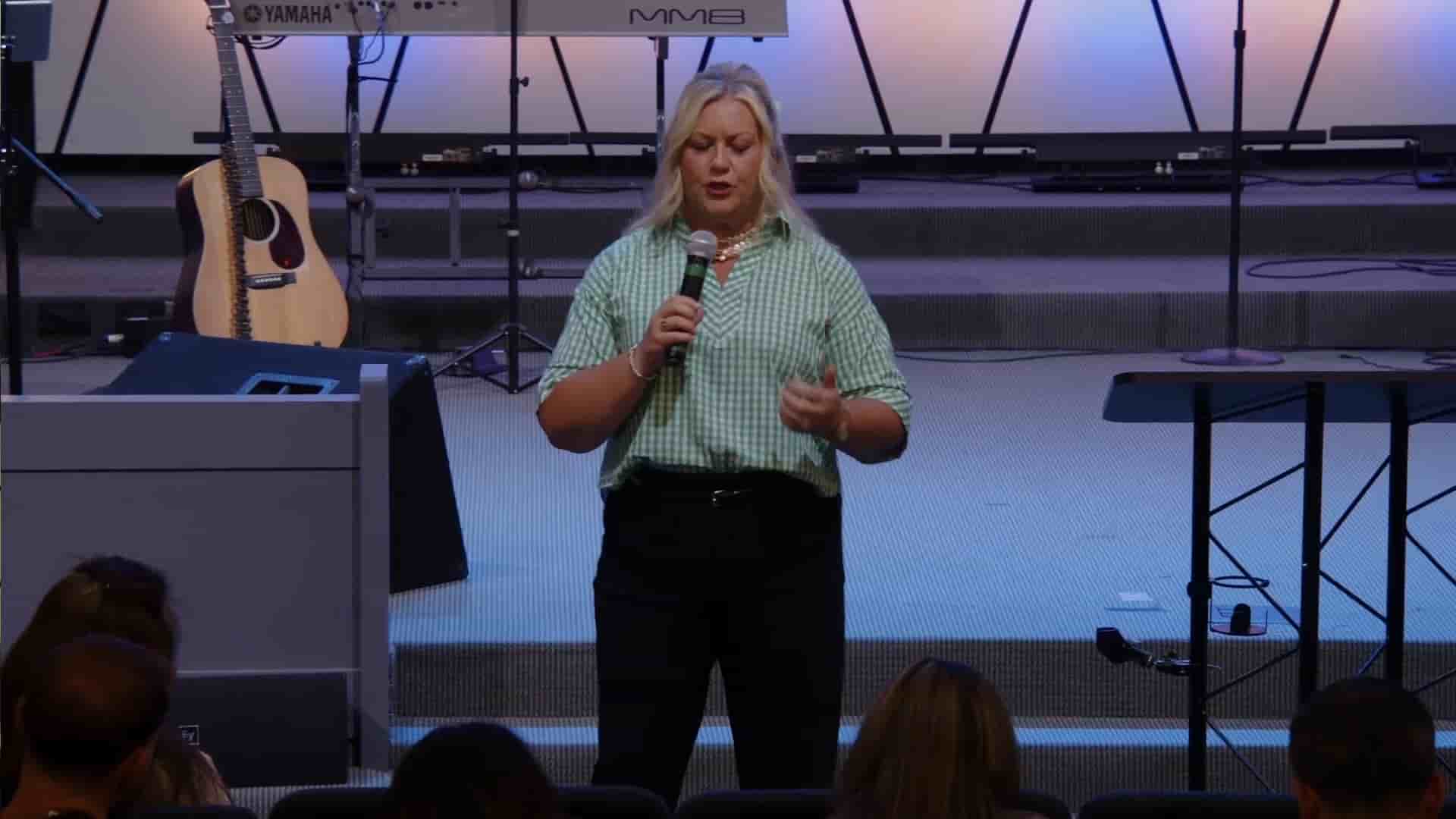
God's call is specific to every person, and this teaching argues that serving God and actually fulfilling your call are two very different things.
Every person carries a specific assignment from God. Not a general invitation to do good things, but a precise plan that was written before you arrived here. That's the claim at the center of this teaching, and it's a harder one than it first sounds, because it cuts both ways: the call is real, and so is the cost of missing it.
The teachers open with a personal confession that sets the tone for everything that follows. Neither of them wanted what they ended up doing. One of them spent years telling God to find someone who actually likes talking in front of people. The other had a father and two older brothers in ministry and decided firmly that she would just be successful in business, support missions from the outside, and keep her distance from a microphone. God, apparently, was unimpressed by both of their alternative suggestions.
The call of God upon your life, the purpose of God, is unique to you. Nobody else can fulfill that.
Jesus is the model here, and the sequence in his life is worth paying attention to. He was baptized by John, the voice from heaven spoke, and then immediately, the Spirit led him into the wilderness to be tempted. He hadn't performed a single miracle yet. The affirmation from the Father came before the proving ground, not after it.
That sequence is not coincidental. The wilderness was the test, and passing it was the condition for everything that followed. When Jesus emerged and began to preach in Galilee, picking up exactly where the imprisoned John the Baptist had left off, he did so as someone who had already been through the fire. The disciples he called were stepping into that same pattern, even if they didn't know it yet.
From that time, Jesus began to preach, crying out, repent, change your mind for the better, heartily amend your ways with abhorrence of your past sins, for the kingdom of heaven is at hand.
What's striking about how Jesus called people is what he didn't say. He didn't promise them comfort, financial stability, or the approval of their families. He gave them a purpose and an invitation: follow me, and I'll make you fishers of men. That was it. No roadmap, no guarantees, no fine print that might have scared them off. The word he did give them was designed to be an anchor later, something to hold onto when circumstances looked like the opposite of what they'd been told.
There's a line from Philippians that gets referenced here: "I press on for the high call of God in Christ Jesus." If there's a high call, the implication is clear — there's also a level people settle for. Not because they're bad people, but because going higher costs something.
The skiing analogy is vivid and honest. Teaching a son on the lower slopes in foggy, icy conditions felt hard. When she skied up to the top of the mountain above the fog line, the snow was fresh, the conditions were clear, and the skiing was actually easier despite the steeper terrain. When she went back down and told him they needed to move up, his instinct was fear. It's really steep. Her answer: the difficulty you feel at the lower level is partly because you've outgrown it. Going higher looks scary from the bottom, but the conditions are better than what you're fighting down here.
So many times in the call of God, it's harder if you're going to stay where you're at. On the inside, if you are hungering and thirsting for God, you actually are outgrowing where you currently are.
The complaining, the grumpiness, the low-grade offense that settles over people who have been in the same place too long — that's often not a personality problem. It's a symptom of someone who knows, somewhere deep, that they're supposed to be further along. The shift required isn't necessarily dramatic. But there is a breakthrough that has to happen, and it usually starts with getting fear out of the mind.
Both teachers are clear on this: accepting the call of God is not a single decision. It's a recurring one. You say yes to what you understand, and then God shows you the much larger picture behind what you agreed to, and you have to surrender again. Then again. Then again in a year.
The gold metaphor carries this idea precisely. Twenty-four karat gold looks fake to most people because they're used to ten or fourteen karat. The higher the purity, the more it had to go through. The process doesn't end at some comfortable midpoint. Going higher in the things of God consistently requires shedding what no longer fits the level you're reaching. An attitude that was fine at one level becomes a hindrance at the next.
The further I go on the call of God, the more God says, I need you purer.
The Holy Spirit, as Kenneth Hagin put it, is a gentleman. He doesn't force. At each level, the question is the same: do you want more of God? Will you surrender more? It's always a choice. And with each layer of surrender, what the person wants and what God wants begin to merge until they're functionally indistinguishable.
Whatever form the call of God takes in a person's life, it will always attach to eternal purpose, which means it will always involve people. The only thing anyone takes out of this world is the impact they had on others. Natural achievements, even significant ones, don't translate.
The story of Melanie Green makes this concrete. A ranked LPGA professional, somewhere around 68th to 75th in the world, came to a place of total surrender. She was ready to walk away from her career to go to Bible college. That willingness, that posture of complete sacrifice, was the key thing. As it turned out, God didn't take the golf away. He used it. She stayed in the sport, recently cracked the top ten in the LPGA, and is by all accounts a bold, open witness for Christ on the tour. She walks into a world most Christians never touch, and she uses her position there.
The point isn't that she got to keep what she loved. The point is that she had to genuinely be willing to lay it down. The moment that sacrifice became real was the moment God could actually work with it.
Anything that you're doing that takes you away from him is not the plan of God for your life. He calls you to follow him.
One of the sharpest distinctions in this teaching is the final one. Serving God and fulfilling the call of God are not identical. A person can genuinely love God, attend faithfully, serve in various capacities, and still not be walking in what they were specifically created to do. There's no condemnation in that observation, but there is a real difference.
When the anointing is present, when a person is operating inside their specific assignment, something happens that technique alone cannot produce. Quiet, reserved people step into a pulpit and find that something has been lit from the inside. The external expression is just the overflow. What produces it is the alignment of who a person is with what God put them here to do. That's not performance. That's a person becoming, finally, what they were made to be.