Yes, it's an insufferable genre, but there are a few exceptions.
For most of my life I’ve been the biggest hater of self-help books. I thought the whole genre was basically disgusting. Some guru telling you that everything is your own fault, because if you’d just work harder, manifest harder, wake up at five and MAKE YOUR DAMN BED IN THE MORNING, then you too could be so incredibly successful.
You could spend your whole life reading shelves of these books without ever encountering a single sentence about luck, inequality, or the fact that success is mostly about choosing your birthplace wisely. As the journalist George Monbiot once put it:‘If wealth was the inevitable result of hard work and enterprise, every woman in Africa would be a millionaire.’
I personally like to call it the right-wing excuse: justifying systemic injustice with a mountain of bullshit about willpower, risk-taking and hard choices.
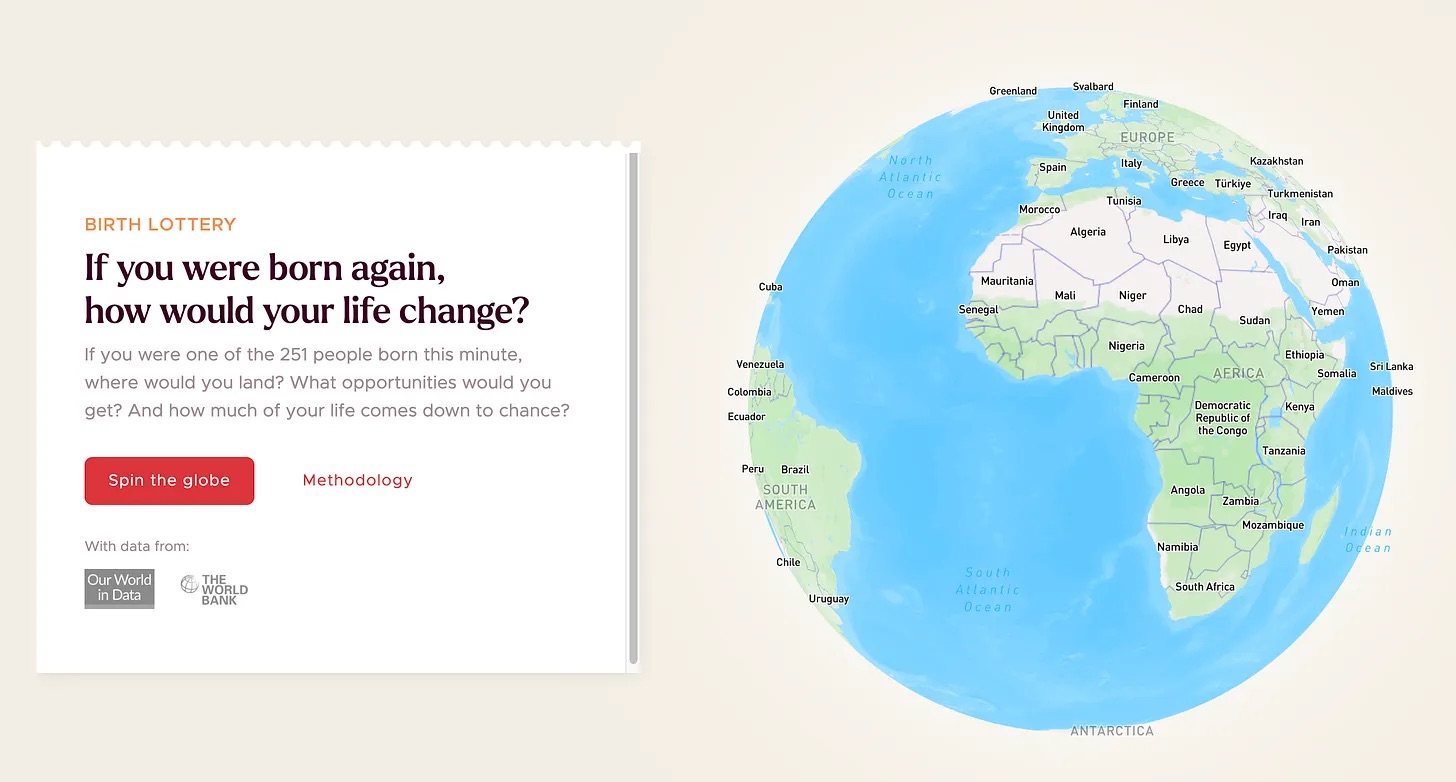 This is an excellent tool from Giving What We Can. It helps you practice the skill of being born in the right country. Try it!
But you know what? I’ve discovered that there’s a left-wing excuse as well. And I have to admit that I’ve used it a lot over the years. In fact, it’s used continually in progressive circles: whenever the conversation turns to personal responsibility, people start complaining about The System, The Elites and The Establishment. Anything to avoid looking in the mirror.
Academics from the humanities are especially good at this. Their endless ‘problematizing’ and ‘interrogating’ of ‘hegemonic power structures’, and their learned ‘deconstruction’ of the ‘neoliberal subject’ under ‘Late-Stage Capitalism’ – it all becomes its own form of escape. The left-wing excuse lets you come across as a radical while never having to do anything at all.
So, what if we could read a self-help book that recognizes systemic injustice andpushes us to do something about it? Well, I've been reading three books exactly like that. They all circle around a single claim: that agency is not a trait you’re born with, but a skill you can learn.
I’ve actually experienced it myself. Until a few years ago, I lived a comfortable life as a writer in a sleepy Dutch suburb and assumed I’d keep doing it forever. Never in a million years did I think I'd co-found an organization or move to New York City to kickstart the US chapter. And now we’re building a whole ecosystem of aligned orgs and a tangle of fellowships across three continents to fight for tax justice, democracy, sustainability, animal welfare and much more.
Sure, my work–life balance is totally shit right now, but hey, at least I’m not one of those whiners on the sidelines anymore!
So, let's see what we can learn from three books written for everyone who lives a sleepy suburban existence and sometimes wonders: could I just do things?
 The vibrant city center of the gorgeous suburb where I live.
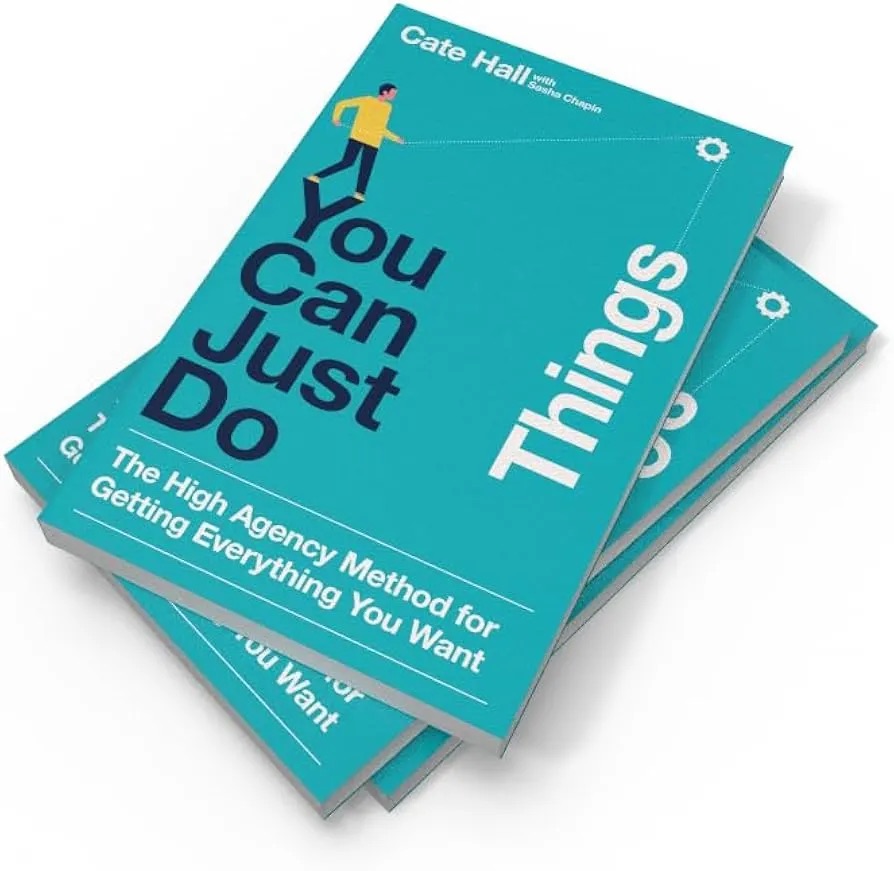
You Can Just Do Things, by Cate Hall (forthcoming: July 21,2026).
Cate Hall is what you could call disgustingly successful. She graduated from Yale Law School, clerked at the highest level, worked on US Supreme Court cases – and at thirty-one, walked out to play poker for a living. Within a year, she was the top-ranked female poker player in the world. Then she co-founded Alvea, a pandemic-medicine company that took a drug into clinical trials faster than any startup in history. Next, she became the CEO of the Astera Institute, a foundation with hundreds of millions to deploy.
I know what you’re thinking: this sounds a lot like MAKE YOUR DAMN BED IN THE MORNING. But I was relieved to read that the above is ‘the LinkedIn version’ of Cate Hall’s life story. In other respects, she is just like the rest of us. For example, she lost three years to psychosis and drug addiction. There were debts she couldn’t pay, friendships in ruins, and one morning when she couldn’t even figure out the two-factor authentication on her own email account.
Hall’s thesis is simple but profound: agency is not a fixed trait, but something you build (the way you’d build any other muscle). And yes, there’s a huge amount of excellent guidance in this book. I loved her advice to ‘Stare into the Abyss’ in particular. Hall shares an amazing list of terrifying questions we can all ask ourselves:
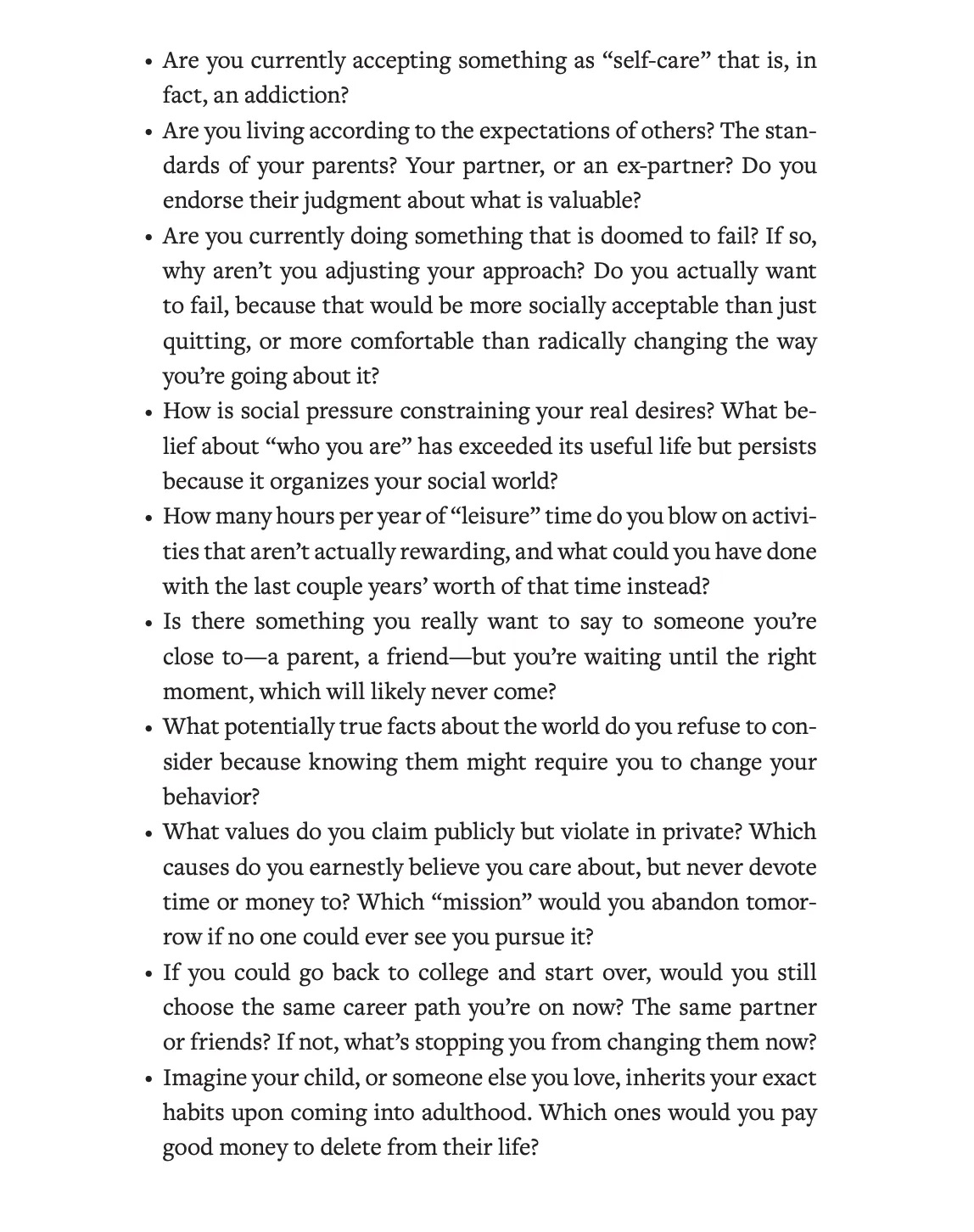 From Cate Hall’s book You Can Just Do Things (pub date: July 2026).
80,000 Hours, by Benjamin Todd.
Life is short and a career is even shorter. To be precise: an average career lasts for about 80,000 hours. If you could use even 1 percent of those hours better, it would be worth spending up to 800 of them (twenty full-time weeks!) figuring out how. Instead, most of us spend more time thinking about where we should go on holiday than on how we should live our lives.
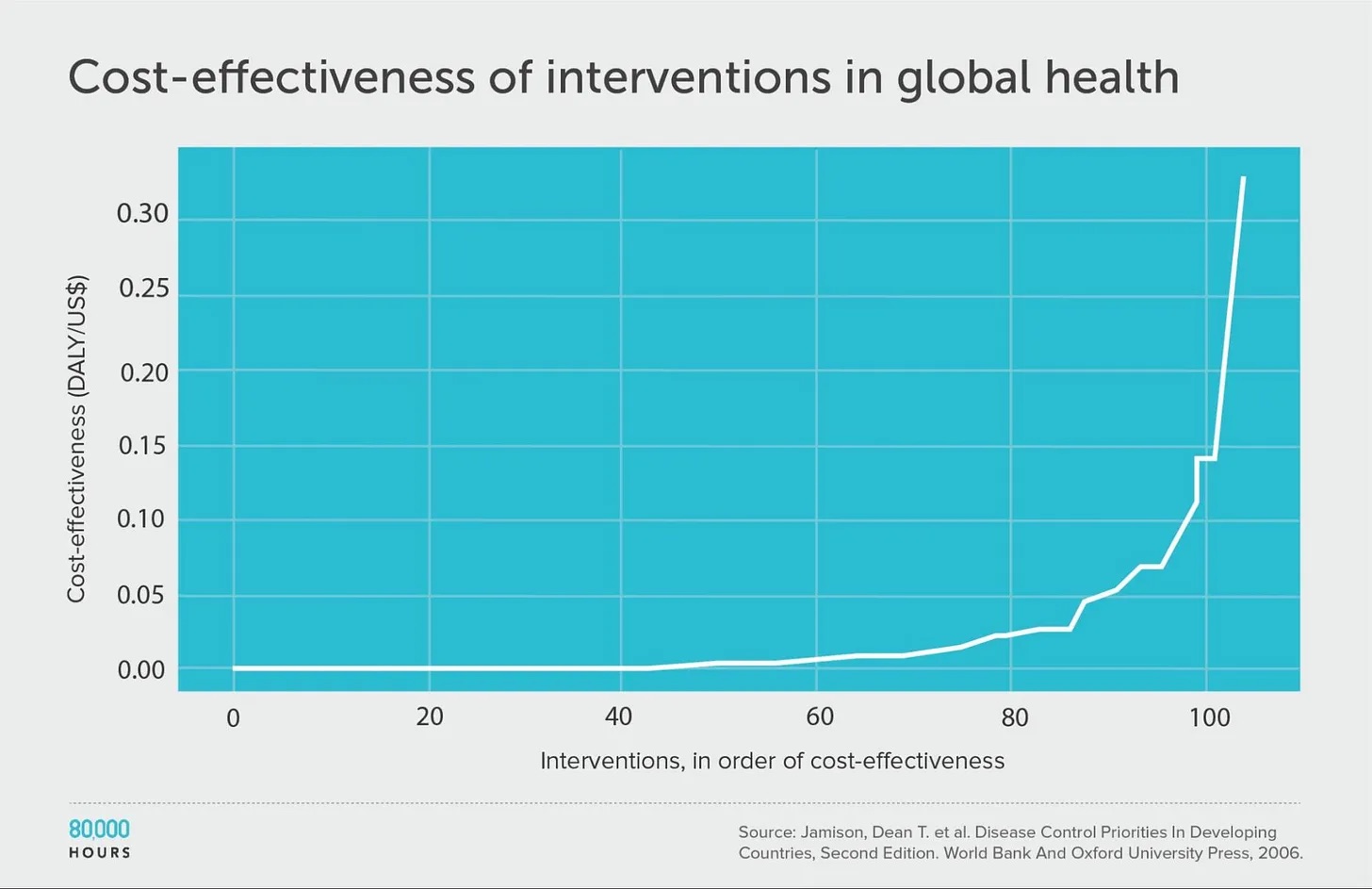
Benjamin Todd started the non-profit 80,000 Hours in 2011 with the philosopher Will MacAskill, in a back office in Oxford, after a lunchtime lecture by the philosopher Toby Ord. Ord had walked them through dozens of studies showing that the most effective charities save 10,000% (!!) more lives than the average charity. (This is one of those facts that you can’t really unlearn once you’ve learned it.)
Todd, MacAskill and Ord all became leaders of the ‘effective altruism’ movement: the most admirable, problematic, weird, impressive, hubristic and misunderstood movement of our time (read Chapter 8 of my book Moral Ambition to learn what I think about ‘EA’).
80,000 Hours is the distilled wisdom of a decade and a half. It demolishes standard career advice like ‘follow your passion’ (research suggests passion follows mastery, not the reverse). It explains why a doctor in a rich country probably saves fewer lives over a full career than a thoughtful donor. And it walks you through the problems Todd thinks matter most today: pandemics, AI risk, factory farming, global health.
For young graduates who’d like to avoid a soul-crushing career in the Bermuda Triangle of Talent (consulting, finance and corporate law), this book is a lifesaver. It’s the closest thing the field of ambitious do-gooders has to a textbook: research-backed, free of jargon, and pretty funny as well!
 A marketing photo of Benjamin Todd's 80,000 Hours. With artfully placed post-its and a tiny plant.
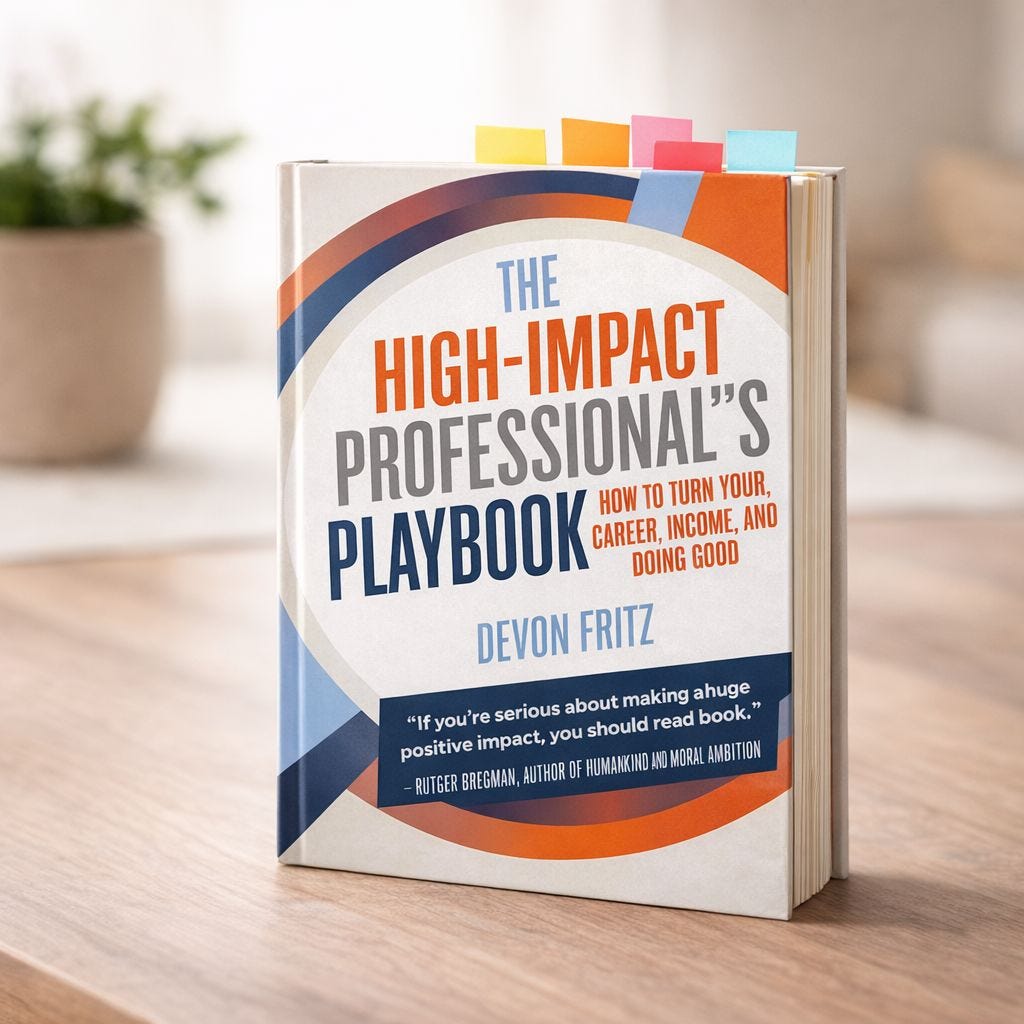
The High-Impact Professional’s Playbook, by Devon Fritz.
Where Todd writes mostly about choosing the right career, Fritz writes about how you can make the most of the one you’ve already chosen. He runs High Impact Professionals, an organization built for people who already have a career and have no intention of torching it.
Fritz is writing for the 41-year-old partner at the law firm, the senior software engineer, the surgeon, the CFO. These people aren’t going to retrain as biosecurity researchers. So Fritz changes the question. Instead of what should my career be?, he asks: how can I have more impact starting Monday, given the career I already have?
The answer is a portfolio of things: smarter donations, workplace initiatives, trustee positions, mentoring, side projects and nudging your existing role in a more impactful direction. I love how concrete he makes all of this. If your office orders catered lunch, ask them to switch it to vegetarian. Set up a workplace donation drive timed to bonus season. Take 1 minute to find out where you sit on the global wealth distribution – you’re probably much richer than you think!
Together, these three books are an excellent rebuttal of the left-wing excuse. It turns out you can just do things about systemic injustice. That’s also one of the messages of my latest essay for paying subscribers: the story of Arnold Douwes, an extraordinary Dutch resistance hero who saved almost a hundred Jewish lives during the Second World War.
Finally, if you’ve read all these books and you’re looking for a fourth, well, I might just know the one…
Until next week!
Rutger
P.S. My Dutch readers may also be interested in the excellent biography of Arnold Douwes that was published recently.