The abolitionists called their first defeat "a delay, rather than a defeat." I think that framing is exactly what our moment needs.
Hey everyone! This past March, I stood in front of a room full of people who, seven months earlier, had decided they wanted to quit their jobs and devote their careers to some of the greatest causes of our time.
At The School for Moral Ambition, we put them through intensive training and place them inside the organizations fighting against Big Tobacco, for fairer taxes on the super-rich, and for a food system that doesn’t wreck the planet.
The day I gave this speech was their graduation: the moment we launch them into high-impact careers. I wanted to send them off with some historical inspiration. Here’s what I said.
When people hear the words ‘moral ambition’, they often ask me: whose morality are you talking about? What gives you the right to define what’s moral?
It’s a fair question! And of course, I’m not a moral philosopher. I’m a historian, so I’d like to answer this question the way I know how: by looking at the past.
I believe we are the inheritors of a great tradition. A tradition that began with a small group of abolitionists in the eighteenth century. A tradition that was carried forward by suffragettes who went to prison so their daughters could vote. A tradition that marched across the Edmund Pettus Bridge in Selma, Alabama, and stood its ground against fire hoses and police dogs.
This tradition has a name, though people argue about what to call it. Some call it ‘liberalism’. Others call it ‘humanism’. I personally prefer the term ‘universalism’. But whatever label you like, its core claim is revolutionary: that every human being is sacred. That our moral circle should expand beyond tribe and nation to encompass all of humanity, and even beyond.
For most of human history, this idea seemed totally bizarre. And the movement behind it was also a strange, unlikely coalition. They mixed modern Enlightenment ideals about universal rights with old religious beliefs about spiritual salvation, and the idea that the Light of God dwells in every human being. And what’s even more important: they turned awareness into action.
I trace this story through Western history, but the core insight that all humans deserve dignity isn’t uniquely Western. Think about Ubuntu philosophy or Buddhism’s universal compassion: they reached similar conclusions through different paths. I want to tell this particular story not because it’s the only one worth telling, but because it’s the one I can tell with some authority.
It all started, I believe, with anti-slavery, the mother of all emancipation movements.
Two hundred years ago, a fire was kindled that would never again be extinguished. What the abolitionists set in motion went far beyond the slave trade. For if slavery could be abolished, why not child labor? If the wretched conditions on Caribbean plantations could be addressed, why not those in British factories? If women could take the lead in a civil movement, why didn’t they have the right to vote?
At the time, most abolitionists didn’t realize what they were unleashing. The subsequent movements for children’s rights, workers’ rights, and women’s rights all adopted tactics the abolitionists had pioneered: designing a logo, distributing posters, collecting signatures, sending newsletters, raising money, writing to politicians, launching boycotts. All became part of the activist toolbox.
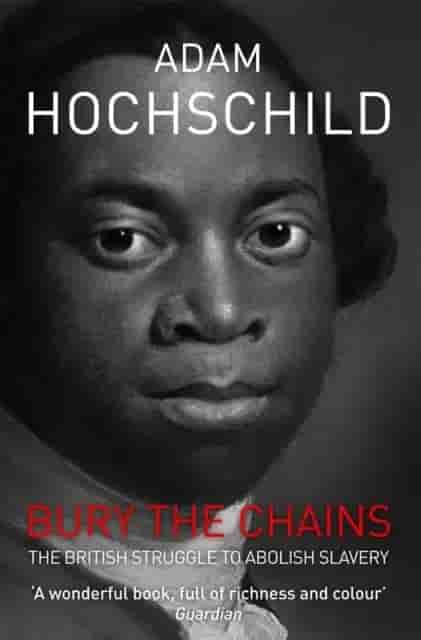
 My favorite book about the abolitionist movement.
My favorite book about the abolitionist movement.
And we’re not just talking about a family of ideas here, we’re even talking about literalfamily lines. Because at the forefront of new emancipation movements were often the children and grandchildren of abolitionists. Think about Elizabeth Blackwell, the first woman doctor, Florence Nightingale, the founder of nursing, and Emmeline Pankhurst, the legendary suffragette. All came from abolitionist families.
Even Charles Darwin – who shook the Church to its foundations and showed that our feet are firmly planted in the animal kingdom – was the grandson of Josiah Wedgwood, one of the early abolitionists.
The universalist project culminated, in 1948, in the Universal Declaration of Human Rights. The woman who chaired the drafting committee, Eleanor Roosevelt, had spent decades fighting for civil rights in America. The NAACP itself had been founded in 1909 by iconic leaders such as Ida B. Wells-Barnett, and the descendants of abolitionists (including the grandson of the legendary William Lloyd Garrison).
So when Eleanor Roosevelt and her fellow delegates sat down to write a universal declaration of human dignity, they were continuing work their predecessors had started two centuries earlier. It was the work of one big family.
And they knew it. Article 4 of the Declaration states simply: “No one shall be held in slavery or servitude.” The victory the abolitionists had won was now enshrined as a universal human right. But the Declaration went further, extending the logic of the expanding circle to encompass freedom of thought, freedom of movement, the right to education, the right to work.
This was one of the great triumphs of human history: the moment when, emerging from the ashes of two world wars and the Holocaust, humanity officially recognized the rights and dignity of every person on Earth.
Of course, the Declaration was always aspirational. It was a utopian document. The gap between its promises and reality has always been vast, and remains so today. But the aspiration itself was clear. It gave us a north star.
And some abolitionists already understood that the circle didn’t stop at humans. The most influential Quakers (people like Benjamin Lay and Anthony Benezet) were all vegetarians. The great British abolitionist Elizabeth Heyrick was a fierce opponent of animal cruelty, and William Wilberforce founded the world’s first animal welfare organization (the Royal Society for the Prevention of Cruelty to Animals).
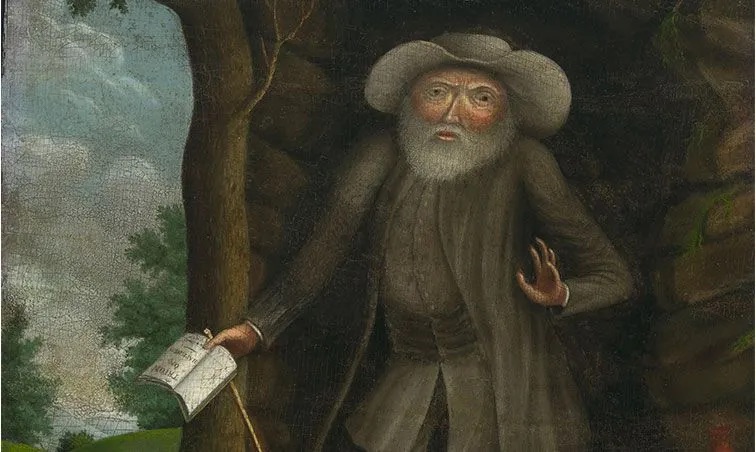 The legendary abolitionist Benjamin Lay (1682-1759) was also one of the first vegans in modern history.
The legendary abolitionist Benjamin Lay (1682-1759) was also one of the first vegans in modern history.
They all saw what Darwin would later confirm: that the line between humans and other animals is not as sharp as we like to pretend. If we believe in reducing suffering, that belief doesn’t conveniently stop at the border of our own species.
Today, the fire the abolitionists kindled is still burning. It has jumped from cause to cause, always pushing further than its predecessors thought possible. This is the nature of our universalist tradition: it never stays still. Each generation discovers that the circle they inherited was still too small. And so the project continues, taking on a life of its own.
We don’t yet know where it will take us. But we know which direction we’re walking.
And yet, in the past few decades something went terribly wrong.
Today, the great universalist tradition is weaker than it has ever been during my lifetime. Over the decades, it became hollowed out. Hollowed out by elites who spoke its language but didn’t practice its virtues. They didn’t realize that this tradition is actually the most demanding of all ideologies.
Just think about what it requires. Our tradition begins with a simple truth: no human being is self-made. We arrive in this world as the most helpless of creatures, completely dependent on others. And we never stop depending on society. Alone, even the strongest among us would perish. This means our flourishing is borrowed. Our freedom is a gift that others paid for.
That gift comes with obligations. All of us must serve the common good. But instead of acknowledging our interdependence, we denied it. We told ourselves a different story (call it ‘neoliberalism’) in which freedom meant nothing more than following your preferences. The language of ‘duty’ and ‘purpose’ came to sound quaint, maybe even embarrassing. People could only be seduced to do the right thing, never obligated. The market would handle everything. Just follow the incentives.
It was a fantasy of the self-made individual, and it was a lie. Yet the lie was seductive, especially to those at the top, because it absolved them of obligation. If I built this ‘myself’, I owe nothing to anyone.
And so the great universalist tradition began to rot from within. Today, we live in a world where everything seems to be collapsing. The rules-based global order is dying. The postwar consensus is unraveling. And those who want to shrink our moral circle are winning.
Of course, the liberal-democratic order I’m talking about was always more selective than its architects admitted. Think Western policy on Palestine, or how global trade structures were designed to benefit rich countries. But for all its flaws, this order was real. It brought the longest period of peace between great powers in modern history. It created institutions, however imperfect, where the weak could hold the powerful to account.
The gap between its ideals and its practice was a hypocrisy, yes, but those ideals gave us something to appeal to, a standard against which to measure reality and find it wanting. If leaders had simply said ‘we believe in hierarchy and domination’, there would have been nothing to appeal to.
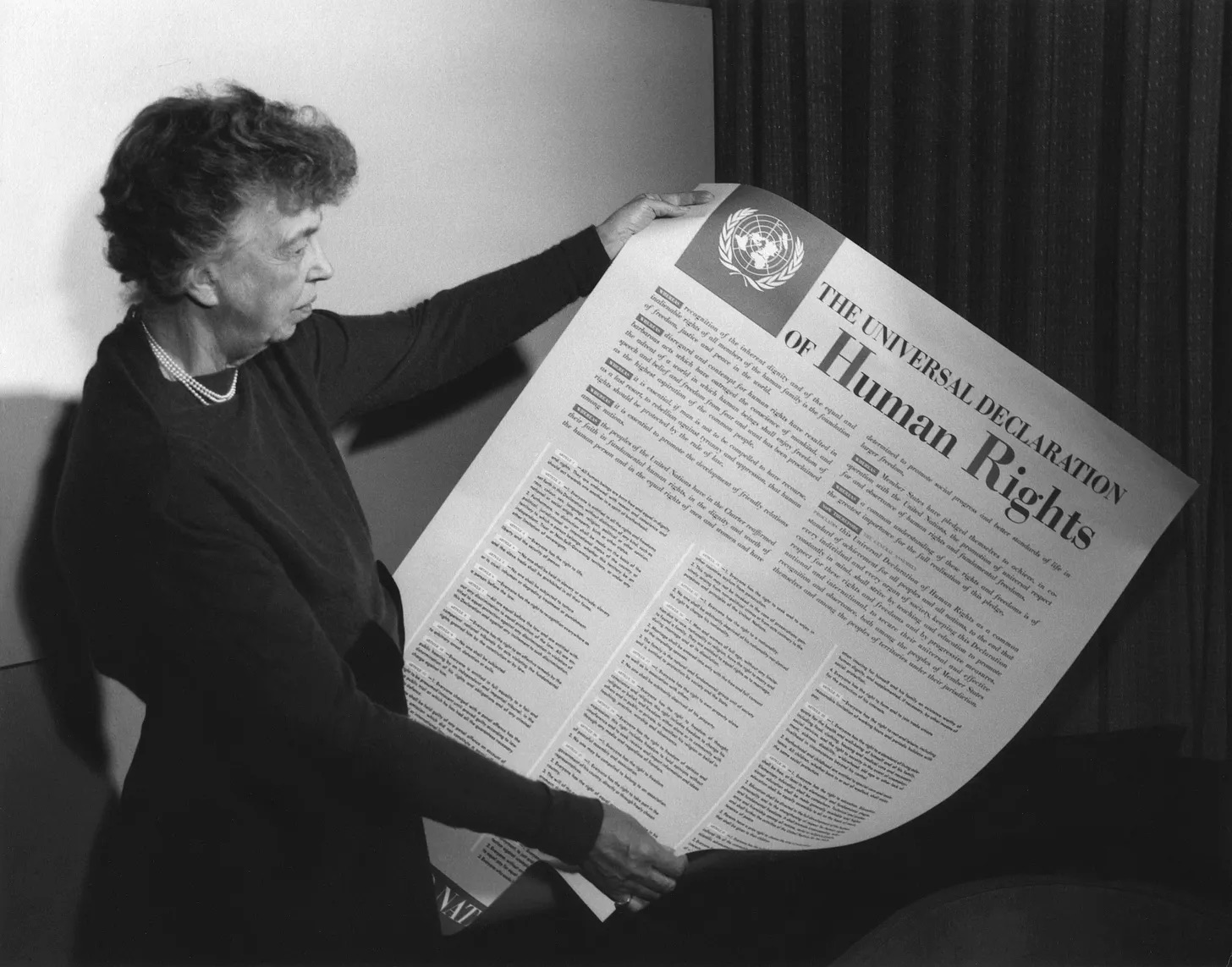
Eleanor Roosevelt in November 1949.
And I’m afraid that’s the situation we’re in right now. The United States in particular has gone beyond the realm of hypocrisy and has entered the realm of resentment and dominance. Just listen to the people we’re up against.
Vice President JD Vance recently gave a speech in which he argued that America cannot be defined by universal principles like those in the Declaration of Independence. In other words: the idea that ‘all men are created equal’ is too generous. It includes too many people. The American nation, Vance argued, must be based on something more particular, more exclusive. On heritage and blood.
Or listen to Stephen Miller, the White House’s ideologue-in-chief, explaining the administration’s worldview on CNN: ‘We live in a world that is governed by strength, that is governed by force, that is governed by power. These are the iron laws of the world.’
There it is: might makes right, the strong do what they can, and the weak suffer what they must. It’s the oldest doctrine in history, the one that the human rights project was designed to overcome. And we see similar movements toward exclusion in Modi’s Hindu nationalism in India and the rise of far-right parties across Europe.
This is what we’re up against. A deliberate effort to reverse the moral progress of two centuries. A movement that looks at the expanding circle and says: too far. Time to contract, time to go back.
This Substack is reader-supported. To receive new posts and support my work, consider becoming a free or paid subscriber.
What can we do about all this? How can we revive our great universalist tradition?
I think the past teaches us at least two important lessons.
First: moments of crisis are moments of possibility. When the center is weak, the iron of history becomes soft. Yes, this is a dangerous moment. Demagogues and authoritarians often seize power during times of upheaval. But it also means that small groups of committed people have more leverage than usual.
Second, we need a double movement. Of course we need bottom-up pressure: ordinary citizens demanding change. But we also need top-down commitment from elites who practice what they preach. We need skin-in-the-game leadership.
And that’s the part that’s hard to hear for many of us. Because most of us are, especially by global standards, the elite ourselves. We went to good universities. We have comfortable lives and privileged positions compared to the vast majority of humans who have ever lived. We belong to the richest 3, 2 or even 1 percent in the world.
That means we need to stop the elite-denial. Stop pointing at others. Stop pretending that ‘the elite’ is always someone else who’s more responsible. Many of the most influential abolitionists were elites too. And they didn’t just check their privilege, they used it.
So: whose morality? My answer is simple: the morality of the abolitionists. The morality of the suffragettes and the civil rights campaigners. The morality enshrined, however imperfectly, in the Universal Declaration of Human Rights.
It’s not my morality. I inherited it, just like you did. And I believe we have an obligation to defend and expand it.
Right now, the lights are going out all over the world. The forces that want to shrink our moral circle are gaining ground. But this is precisely why our tradition matters. It reminds us that we’ve faced such moments before. And it reminds us that we are not alone. We are in the company of our ancestors. We are just a small part of a much greater tradition, a tradition that has had to overcome challenges far larger than the ones we face now.
The abolitionists fought for decades against an institution that seemed eternal and invincible. The suffragettes were ridiculed and force-fed. The civil rights campaigners faced firehoses and murder. And still they persisted.
After the British abolitionists suffered their first major defeat in Parliament, after years of grueling work that seemed to have come to nothing, the young abolitionist Thomas Clarkson described their committee meeting. It was, he wrote, ‘the most impressive I ever attended. The looks of all bespoke the feelings of their hearts.’ They passed a series of resolutions thanking those who had stood with them. And then they declared that they considered ‘the late decision in the House of Commons as a delay, rather than a defeat.’
A delay, rather than a defeat. These people refused to see it any other way. And they made a vow:
‘We do hereby, under an increasing conviction of the excellence of our cause... renew our firm protestation, that we will never desist from appealing to our countrymen, till the commercial intercourse with Africa shall cease to be polluted with the blood of its inhabitants.’
They kept that vow, and they won. Of the twelve founders of the British Society for the Abolition of the Slave Trade, only Clarkson was still alive when slavery was finally abolished throughout the British empire.
At The School for Moral Ambition, we’re building something that takes this history seriously. I am proud and grateful to be able to play my small part in this, and to be in the company of my heroes: our extraordinary fellows who graduate today.
Together, we will make moral ambition contagious again – not as empty virtue-signaling, but as real commitment and real action. We know that our causes are too big for any one of us. But we find solace in the fact that one day we may pass the torch to the next generation of our great universalist family.
This is our morality: the expansion of the circle of dignity. The belief that everyone matters. The conviction that the powerful have obligations to the powerless. It’s not a narrow ideology, but an ancient and ongoing project. It’s the most demanding vision in the world. But it’s also, I believe, the most beautiful.
Thank you.
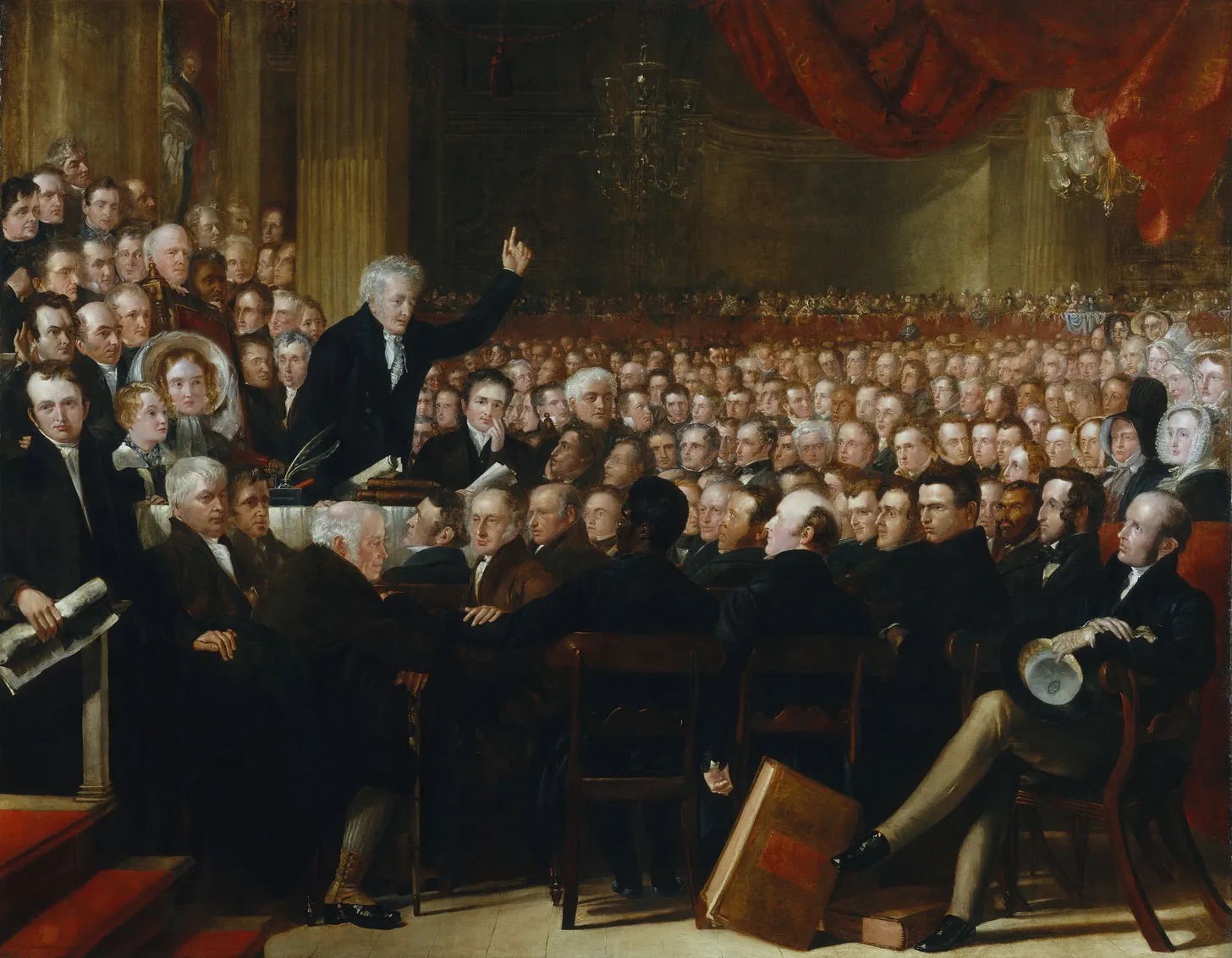 The first international anti-slavery convention, in 1840. Thomas Clarkson gave a rousing keynote speech, but women weren’t allowed to speak or vote. The attendees Elizabeth Cady Stanton and Lucretia Mott were absolutely livid, went back to America, and - eight years later - organized the first women’s rights convention at Seneca Falls. (I guess in this case the great universalist torch wasn’t passed to them – they just snatched it from the men who tried to keep them quiet!)