The real differentiator between founders isn't ideas or execution. A second-time founder knows it's all about distribution.
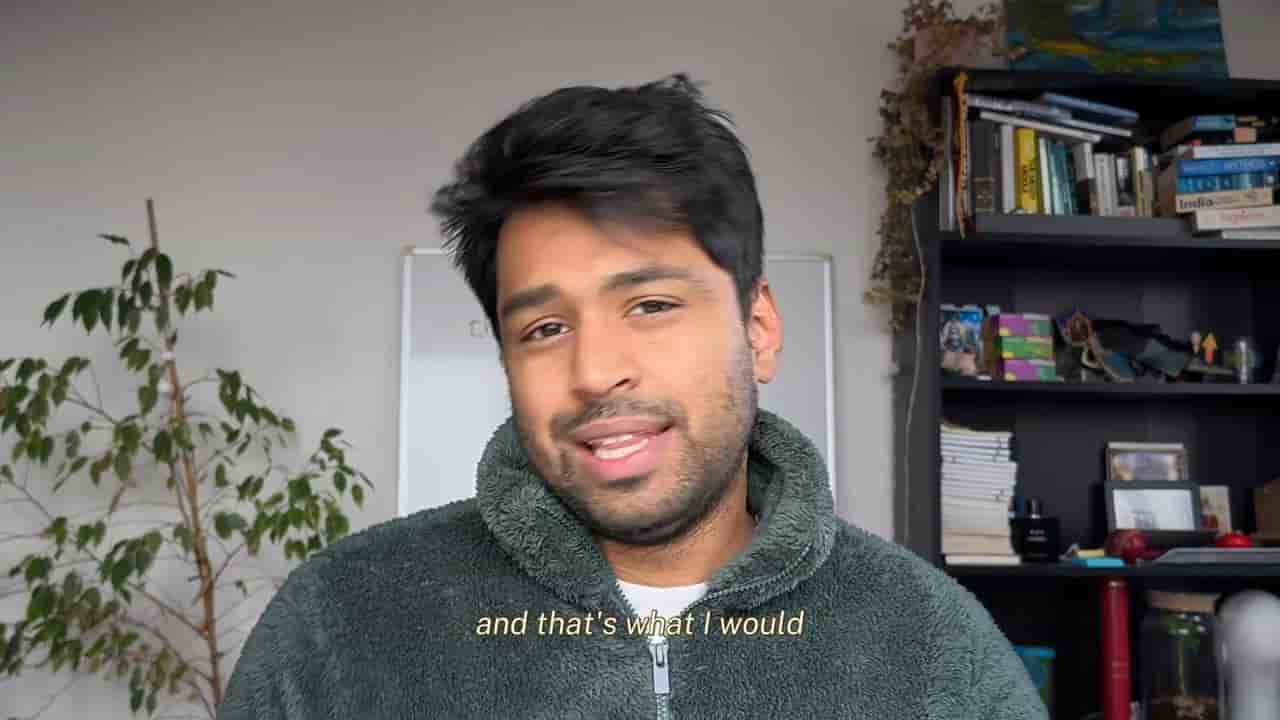
I'm Karthik Mahadevan, co-founder and CEO of Envision, where we build AI-powered tools to help people who are blind or have low vision independently access the world around them. After five years of building this company, I've learned something that completely changed how I think about startups. It's a progression that most founders go through, but nobody really talks about it until they've been through it themselves.
A non-founder thinks it's all about the idea. The first-time founder thinks it's all about the product and the execution. A second-time founder knows it's all about the distribution.
When you're not a founder or when you haven't been inside of a startup that's building something new, there's often this notion that it's all about the idea. It's all about this spark or eureka moment where you come up with something brilliant. This is a myth perpetrated by media, where people start to believe that Facebook exists because Zuckerberg had this stroke of genius, or that Windows exists because Bill Gates had this amazing idea to build an operating system.
This whole emphasis on ideas is really oversold.
But once you start actually building a company with an idea, very quickly you come to a realization that ideas are actually not worth that much. It's all about how you execute. It's about how you build the product, the details of the product. That's actually the hard part, and that's the thing that differentiates anybody from a successful entrepreneur.
It's all about how do you go about executing this idea. It's about how do you build the product. It's about the details of the product.
You become obsessed with building the product well. You want to get the details right. You want to execute well. And you start seeing examples of this everywhere. You realize that Apple is Apple not because it had this brilliant idea of an iPhone, but because it was able to build and execute the product with all the details there. That's the differentiator.
But because you get so obsessed with building your product and doing the execution, you actually come to a second realization soon after. It's not about the product and the execution. It's actually about the distribution.
The differentiator is you figured out a way not just to turn your idea into a good product, but have also been able to figure out that this product is actually distributed amongst the people who need it in the best way possible.
When you're obsessing over the product, you sort of optimistically start to believe that if you build the best product out there, everybody will want it and everybody will come to you asking for it. But that's often not the reality. You have to really, painstakingly, figure out the distribution. You need to ensure that everybody out there who has a need for your product can actually get access to it instantly.
That's when you start to understand why Tim Cook is CEO of Apple and not Jony Ive, who built the products. Tim Cook is the person who figured out the distribution. He figured out that anybody in the world who wants an iPhone can actually have an iPhone in their hands within a week. And that's actually the differentiator. That's what makes or breaks a successful founder.
A very good example of this would be Slack and Teams. I think everybody agrees that hands down Slack is a product that's superior to Teams. It's much better executed. The details are amazing. On a product comparison, Slack is the better product.
But you've probably seen the graph. The differentiator here is that Teams has the distribution because everybody already has Microsoft Office. And because of purely having the distribution figured out, Microsoft Teams will beat out Slack in terms of having a lot more users because they actually got the distribution nailed down.
The reason I'm talking about this on video is because Envision is currently at a very interesting juncture in time. There has been a lot of developments just in the past few months in the world of AI and available technologies. Envision has been in both of these industries for the past few years. We've built a lot of perspective and skills in both areas.
Now we have this amazing opportunity to use those learnings and skills to actually expand the opportunity space that we have in front of us. It's not a pivot. It's more of an evolution that we're undergoing. And I'm very excited about this new phase of Envision.
This time, I want to do this by building in public.
I want to bring you along on this journey of how we go from what is an idea at the moment into a product that gets executed, and eventually about how we figure out the distribution, the differentiating factor of this whole thing.
Every week, we intend to put out a video that brings you along on this journey. We'll share our ups and downs and all the progress along the way. The video that comes out next week will explain this idea to you, explain the concept, and give you an idea of exactly how we intend to execute it.
If you're interested in following along and seeing how we navigate from idea to product to distribution, come join us on this journey. Hopefully along the way we'll figure out what's the right way to make this progression happen.