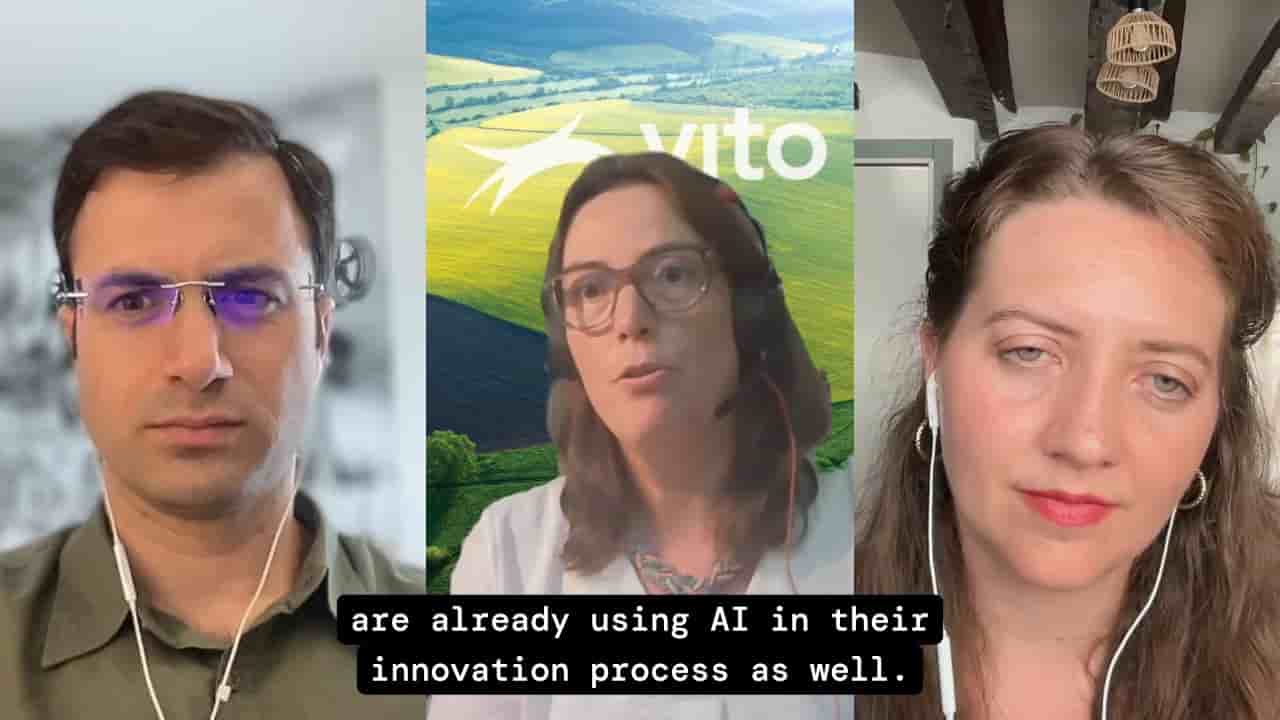
Sumair sits down with Maaike van Velzen, who runs IP at VITO, the Flemish research and technology institute that patents across energy, materials, health and environment. Maaike previously held the VP of IP Portfolio Management role on the industry side, and she now watches her team evaluate AI tools landing on patent attorneys' desks every month. The conversation stays close to the ground. Where does AI actually help a patent professional today, where does it still fall over, and what does "augmentation" look like when the invention disclosures come out of fifteen different research domains? Maaike walks through the arc from the old semantic-search era into today's drafting co-pilots, why reviewing AI output against your own house style is the real work, and why a research institute with the breadth of VITO needs tooling that can cover a lot of ground without pretending to be a substitute for the attorney. The through line: the attorneys who get the most out of AI are the ones treating it as leverage on top of their judgement not as a shortcut around it. Inventors prompt differently, firms adopt differently, and the tools that will last are the ones that stay inside the closed universe of a prosecution file instead of guessing from the open web. What we cover - The arc of patent AI: from semantic search and similarity to drafting co-pilots - Reviewing AI output: style, accuracy, the parts an attorney still has to check - Running an IP function across a research institute that spans many technical domains - Where AI genuinely augments the attorney and where it still fails - The bigger question: if AI lowers the cost of drafting, will we see more inventions in general? For patent attorneys, in-house IP leads, R&D institute IP teams, and anyone deciding how AI should sit inside a real prosecution workflow.
Sumair sits down with Maaike van Velzen, who runs IP at VITO, the Flemish research and technology institute that patents across energy, materials, health and environment. Maaike previously held the VP of IP Portfolio Management role on the industry side, and she now watches her team evaluate AI tools landing on patent attorneys' desks every month.
The conversation stays close to the ground. Where does AI actually help a patent professional today, where does it still fall over, and what does "augmentation" look like when the invention disclosures come out of fifteen different research domains? Maaike walks through the arc from the old semantic-search era into today's drafting co-pilots, why reviewing AI output against your own house style is the real work, and why a research institute with the breadth of VITO needs tooling that can cover a lot of ground without pretending to be a substitute for the attorney.
The through line: the attorneys who get the most out of AI are the ones treating it as leverage on top of their judgement not as a shortcut around it. Inventors prompt differently, firms adopt differently, and the tools that will last are the ones that stay inside the closed universe of a prosecution file instead of guessing from the open web.
What we cover
- The arc of patent AI: from semantic search and similarity to drafting co-pilots - Reviewing AI output: style, accuracy, the parts an attorney still has to check - Running an IP function across a research institute that spans many technical domains - Where AI genuinely augments the attorney and where it still fails - The bigger question: if AI lowers the cost of drafting, will we see more inventions in general?
For patent attorneys, in-house IP leads, R&D institute IP teams, and anyone deciding how AI should sit inside a real prosecution workflow.