After 22 years as a health coach, I found breathwork through a yoga class. Four pieces turned it into lasting change for me and my clients.
Breathwork is not just breathing, and a couple of videos will not make anyone a facilitator. I teach it differently from a lot of people, and I care a great deal about raising the standard of practice in this industry. So I'll start with who a facilitator training is not for.
It is not for you if you want a quick certification without learning the physiology, the psychology, and the safety behind the work. It is not for you if you want one of those one-size-fits-all techniques and have no interest in the human sitting in front of you. It is not for you if you'd rather look like a healer on Instagram than become one who can skillfully hold space. It takes a lot of healing to do this work for others, so you have to be willing to do your own. And it is not for you if you want a get-rich-quick business plan, or if you won't take seriously the responsibility of working with someone's nervous system and emotions.
If you're still here, curious, willing to learn, and you give a damn about doing this well, you're who I built this training for.
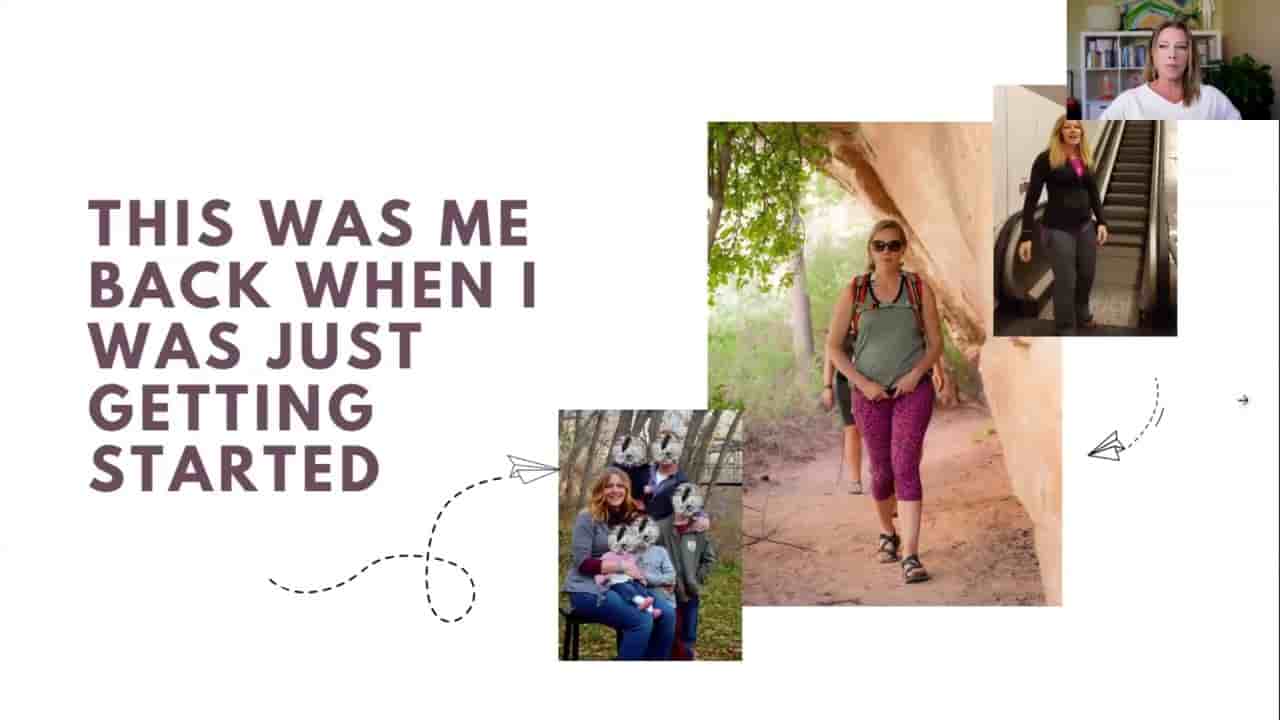
I was a health coach for 22 years, with a degree in physiology. I spent decades studying the body, watching patterns, and helping people. My clients got awesome results. I did not. My weight swung up and down, I had stomach ulcers, thyroid issues, and constant bloating. (This is TMI, but it matters.) I would go a week bloated and barely able to use the bathroom, then lose an entire day sick at home, and the cycle would start over. I was in an abusive marriage, I was depressed, and even with four kids I didn't have the energy to be the mom I wanted to be.
I found breathwork in a yoga class. I had done a ton of yoga in my life, and this one was different. The instructor used a lot of breath practices, and afterward I felt clear, like I could breathe, like I'd had a good cry without crying. I went home and leaned on my physiology background to work out why. It was obviously the breath, because that was what had changed.
I fell in love with that pranayama style, got certified, then learned journeys, holotropic breathwork, Wim Hof, rebirthing. I became obsessed, read every book, and brought the practices into my own life and my health coaching clients' lives. Their results, already good, went higher. I moved into teaching breathwork full-time, left the marriage, and healed my nervous system from that trauma through breathwork.
Today I'm happier and healthier than I've ever been. My metabolism burns what I eat. I can eat the gluten and dairy I used to think I was allergic to, because my digestion works. The ulcers are gone. My kids' nervous systems mirrored mine as I healed, and now they ask me things like "Hey mom, what's a breath I can do? I'm feeling a little anxious."
My sessions sold out, my one-on-one calendar filled, and four weekly group classes always sold out. People started asking me to teach them what I do. When I told them to take physiology classes, psychology classes, and get certified in this style and that style and that style, they dropped out. That path took me years and a hundred thousand dollars. That is where my mission started: an army of educated, compassionate, and ethical breathwork facilitators. I can only reach so many people myself. Facilitators, coaches, and healers can reach the rest.
What I've put together is that breathwork plus supportive guidance is a puzzle, and it takes four pieces to complete it.
Big changes in people that last, not a cool experience you post on social media.
This means knowing how you're breathing moment to moment, knowing proper rates, rhythms, and mechanics, and noticing when you shift in and out of them. Try it now. Are you breathing through your nose or mouth? Into your chest or belly? Deep or shallow, fast or slow? I notice myself holding my breath while driving, or while painting a small detail, or when I'm waiting for the other shoe to drop. My breathing speeds up around certain people. That noticing is the first piece.
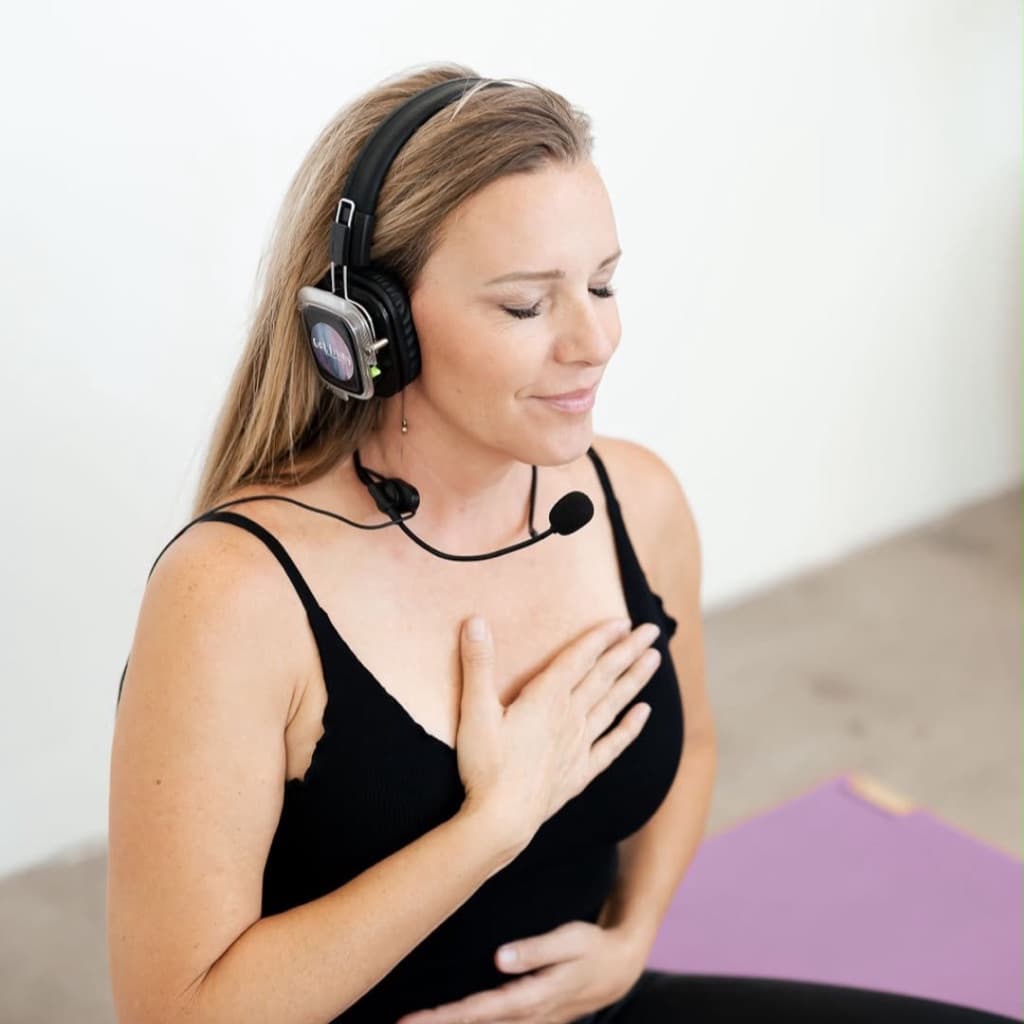
A journey is the kind of session where you lie on a mat or bed and hold the same breath rhythm for about 45 minutes. It brings an altered state of consciousness where people release trauma, shake loose limiting beliefs, get creative, or have out-of-body experiences. Some journeys are emotional release, some are calming.
One of my most profound happened in a studio by a river. In the journey I jumped on a horse, plugged my long hair into its tail, Avatar style, and rode up the river to a teepee where four elders held a full four-round sweat over me. It lasted a split second. Then I was ushered onto another horse and flew over rivers and mountains to my great-grandmother's territory, where she spoke Shuswap over me. I don't understand Shuswap, but in that moment I did. The message was: you're supposed to do this, you're being healed, everything's going to be fine.
I came out crying and free. I could see the white fur on the horse, smell it, feel the mane in my hands and the steam from the sweat. It began one of the deepest parts of my healing so far.
One session can be like years of therapy.
My very first session helped me with trauma from my marriage that I had been in therapy over for years. That was when I stopped being the victim and became the victor of my life.
During the live session, Melissa offered a theory for why journeys work: people don't want to relive their trauma, and in breathwork you can observe feelings without having to confront the story, while the body releases it. She's right. The short version is that we hold tension from past fight-or-flight experiences, chronic or short-lived. A journey brings you back to a heightened state, which lets your body finish the nerve impulses that never completed during the stress. The tension lets go. Melissa told us a version of this herself. After her sister passed, she tried every modality, each worked only in pieces, and breathwork was what finally let her live and talk about it.
These are a few minutes of breath a day. They balance your nervous system and strengthen your respiratory system, so you breathe more efficiently the rest of the day. It works like the gym: you train for a few minutes so you're stronger and healthier outside of it. My certification teaches over 52 techniques, because which ones you need depends on you specifically.
You are said to be like the five people you spend the most time with, and the reason is physiological. Your nervous system mirrors the people around you, through the breath. Mirror neurons exist to copy those near us. When someone nearby starts breathing fast or becomes elevated, and you're not paying attention, your breathing and nervous system shift to match. In your first seven years you're a sponge, copying whoever cares for you. Grow up around someone anxious and you likely inherit some of that anxiety.
So when you're trying to change your breath and your nervous system, you want to be around people who have already made those shifts or are making them too. I've watched the power of an uplifting community with like-minded goals, and it is transformational.
Breathwork directly influences the autonomic nervous system, the balance between sympathetic (fight or flight) and parasympathetic (rest and digest). It affects CO2 tolerance, which shapes fatigue, anxiety, and, through pH, how your organs function. It tones the vagus nerve, the tenth cranial nerve, which runs down through the larynx, the digestive organs, and the diaphragm, the main breathing muscle. The vagus nerve accounts for about 70% of your parasympathetic nervous system, your ability to get back to calm. And breathwork affects oxygen delivery to muscles, organs, and brain.
If breath can do all that, it can also do harm when chosen at random. Can you overstimulate an already overstimulated system? Yes. Can you suppress a system that has already collapsed? Also yes.
Take someone so stressed that their nervous system has collapsed into dorsal vagal shutdown: freeze or fawn, disassociated, checked out, unable to feel their feelings. Sit them in front of a calming video, say a 4-7-8 breath, and have them practice it daily, and you keep suppressing a system that is already down. They need a technique that brings them back up toward sympathetic activation, because the body needs both states. A body stuck in collapse starts shutting organs down.
The breath has to be chosen for the person in front of you.
That is why assessment is a core skill: reading someone's nervous system, breathing mechanics, and health, then choosing a breath for them.
Rachel struggled with infertility. She did a womb healing breathwork ceremony and found out she was pregnant two weeks later. She kept practicing through that pregnancy and said the doctors called her baby the healthiest they'd seen in a long time. Breathwork also helped her through a later miscarriage and into a second pregnancy.
Jessica, my favorite, healed her Hashimoto's. After years with an endocrinologist and a family doctor, a functional doctor found nine things wrong. Her cortisol was around 280 when it should have been near 100. The doctor asked whether she had heard of breathwork and told her to take a class before the next blood test. Jessica came to journeys with me every two weeks. Within six months her cortisol went from about 250 to about 140, her Hashimoto's was gone, and her progesterone and testosterone rose.
Breathwork gave me my life back. As dramatic as that sounds, I mean it. — Jessica
Someone asked what type of breathwork Jessica did. There is no single one. She did journeys, but I changed them every time. She did not box-breathe her way out of Hashimoto's. What worked was matching the technique to her, which is exactly what assessment training teaches.
You've probably been training without realizing it. Have you always been the person people come to? Do people tell you things they don't tell others? Are you fascinated by why people behave, feel, and heal the way they do? Have you spent years working on yourself, or gone through something hard that made you want others to suffer less? Do you collect certifications, books, and modalities because you can't stop learning about healing? Do you get ridiculously excited when someone has a breakthrough? Have you thought, I know I'm supposed to help people, I just don't know how yet?
Even one yes is a clue, not a qualification. You still need training, in assessment and in the full range of techniques, and in knowing which to use with whom. But if this made you think, wait, could this be my calling, pay attention to that. You can find more at GetLivingWithBreathWork.com.