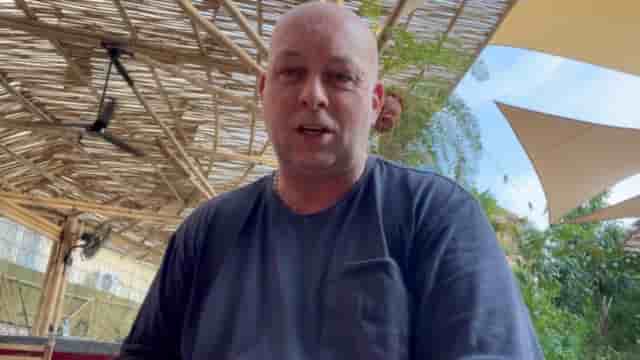
After ten years teaching in Asia, I watched a man in Wales plan a Phnom Penh job hunt with Gemini, a 120-hour TEFL and £3,000. Here is what I told him.
Yesterday I read about a man who was landing in Phnom Penh at midnight with a 120-hour TEFL, £3,000, and a dream of being a teacher. He had done his research on Gemini, from a computer chair in Wales. He told me he could get a job at a low-tier training centre. I've spent the past year riding around this city on my bike looking for those, and I can't find them.
I'm recording this while out and about, because my online students in China are at school today for an extra day. I've been teaching for ten years, nine of them in China. I'm not a guru and I'm not a master at this. You're always learning. But the TEFL-and-off-you-go pitch sounds great, and the reality is very, very different.
When I started, the formula was simple: turn up, blue eyes, native-speaking passport. That list didn't include South Africa or the Philippines for a long while. They've been accepted for the past few years, which sounds like progress until you see the salaries. South African and Filipino teachers typically earn a quarter to a half of what a British teacher gets.
The bigger shift is on the qualification side, and it started in China. China was first to demand a 120-hour TEFL, and the rest of Asia copied it. Then China raised the bar to a bachelor's degree, and not a random one in business or psychology. It had to be in education, or you needed a teaching certificate from your home country. Thailand, Vietnam, Korea, Japan and others followed, with Laos the one I don't think has yet.
People who couldn't get jobs in Vietnam and Thailand are moving this way, and that's why I say Cambodia is saturated.
When I first came here, adverts asking for a minimum bachelor's degree didn't exist. Now I see them constantly. A degree isn't law in Cambodia, but think about it from the school's side. One candidate has a basic online TEFL. Another has a teaching qualification, a degree, a TEFL and five years of experience. Who gets the job?
I see messages every day from people saying they've been looking for months and can't get an interview. If that's you, there are a few questions to ask:
That last one is where I learned the most. I have a degree, a TEFL, an advanced TEFL, an IELTS certificate and a Minecraft Education Ambassador badge. I messaged lots of schools on Telegram and by email and got no replies at all. Then I went to the schools in person, and once I walked through the door they wanted to talk to me.
I wasn't in shorts, a t-shirt, a baseball cap or shades. I was in trousers and a shirt. You don't have to turn up in your Sunday best, but you need to look presentable and look the part. A backpacker doesn't get the job.
The reality and the expectation don't meet. Sometimes they're not even in the middle.
The man from Wales told me he'd do his visa on arrival and that the school would sort it out. I asked whether he had applied for an e-visa yet. He hadn't. It's easier online, and there's an EB option, the business visa. At the airport you're likely to be pushed toward a tourist visa only.
A friend of mine did exactly that when he moved from Indonesia, where visas are getting harder. I told him a week or two beforehand which visa he needed and to apply online. He did it his own way. Now he's on a tourist visa, which can be extended once, and then he has to leave the country.
My own situation shows how far expectation can drift from reality. My school can only employ so many teachers under its umbrella, so I hold a self-employed work permit. The school put me in touch with the person who arranges it and paid half the cost, not all of it. Other schools will tell you to arrange your own visa, or that you shouldn't be here on a tourist visa at all. You should come on a business visa and get the work permit through the school. I learned that over this past year, and nobody's Gemini summary will tell you which school does what.
My advice to him was to start teaching online first. If you arrive with a backup plan, you're more likely, and I won't say certain because nothing is, to last longer than someone arriving with none. His plan was to land, find the training schools wherever they are, and work it out from there. I've found lots and lots of schools by bike. I haven't found those.
He paid nearly £120 for his online course, which is a lot given how many are out there. I'll give this its own video, but I've already tested one that South Africans are using to try to get jobs. It's free and web-based. I used it for five different jobs online all five said they don't accept it, because it isn't affiliated with or credited by any organisation. It's worthless. I finished it in four hours, not 120, and that alone should set off warning bells.
There's a course here in Cambodia run by a guy whose work I generally like. I keep messaging him to ask whether his students know the market is changing. The big change over my ten years is that you need a bachelor's degree in so many places.
I'll say it plainly. In China it used to be that if you weren't white, you wouldn't get the job. That was true, and it's just a basic fact. Schools didn't care about your skill, because you didn't have the look. I remember a Russian guy who couldn't speak English. I mean he couldn't pronounce the words "orange" or "apple".
Whatever your plan is, know what you're signing up for. I've gone back into a physical classroom here in Cambodia after years of 25 to 40 kids a class in China. At my international school I had 11 students in one class and 8 in another last year, and this year 8 and 6. That means more time for each child, and more challenges too, believe it or not.
So what do you picture? Coffee by the beach at lunchtime, laptop open at home? Or lesson prep the night before, quizzes to mark, and a day of "concentrate, sit down, be quiet, please stop talking"? Tell me in the comments what you think the reality is. I'll be showing you mine in this series.